Introduction
Losing weight is one of the most common health goals worldwide. However, many people struggle because they follow strict diets that are difficult to maintain. Some diets promise rapid results, but they often lead to frustration, nutrient deficiencies, and weight regain.
The truth is that the best weight loss diet plan is one that is healthy, balanced, and sustainable. Instead of starving yourself or cutting out entire food groups, focus on eating nutritious foods that support your body’s needs while creating a calorie deficit.
In this guide, you’ll learn the best weight loss diet plan for fast and healthy results, including meal ideas, foods to eat, foods to avoid, and practical tips for long-term success.
What Makes a Good Weight Loss Diet Plan?
A successful weight loss diet plan should:
- Provide enough nutrients
- Help control hunger
- Be easy to follow
- Support long-term habits
- Promote gradual fat loss
Healthy weight loss is typically 0.5 to 1 kilogram per week. This pace is considered safe and sustainable.
The Importance of Calorie Deficit
Weight loss occurs when you consume fewer calories than your body burns.
This is called a calorie deficit.
For example:
- Daily calorie needs: 2,200 calories
- Calories consumed: 1,700 calories
This creates a deficit that encourages the body to burn stored fat for energy.
However, avoid extremely low-calorie diets because they can slow metabolism and reduce energy levels.
Foods to Eat for Weight Loss
1. Lean Protein Sources
Protein is one of the most important nutrients for weight loss.
Benefits include:
- Keeps you full longer
- Supports muscle maintenance
- Reduces cravings
Best protein foods:
- Chicken breast
- Fish
- Eggs
- Greek yogurt
- Lentils
- Beans
- Tofu
Try including protein in every meal.
2. Vegetables
Vegetables are low in calories and rich in nutrients.
Best choices include:
- Spinach
- Broccoli
- Carrots
- Cucumber
- Lettuce
- Bell peppers
Fill half your plate with vegetables at lunch and dinner.
3. Fruits
Fruits provide natural sweetness and important vitamins.
Healthy options:
- Apples
- Oranges
- Berries
- Pears
- Watermelon
Fruits can help satisfy sweet cravings without excessive calories.
4. Whole Grains
Whole grains provide fiber and long-lasting energy.
Examples include:
- Oatmeal
- Brown rice
- Whole wheat bread
- Quinoa
These foods help keep hunger under control.
5. Healthy Fats
Healthy fats support overall health and improve satiety.
Good sources:
- Avocados
- Olive oil
- Nuts
- Seeds
Eat them in moderation because they are calorie-dense.
Foods to Avoid
Certain foods can slow weight loss progress.
Limit:
Sugary Drinks
- Soda
- Energy drinks
- Sweet tea
Processed Foods
- Chips
- Cookies
- Fast food
Refined Carbohydrates
- White bread
- Pastries
- Sugary cereals
Excessive Fried Foods
- Fried chicken
- French fries
- Deep-fried snacks
Replacing these foods with healthier options can significantly improve results.
Sample Weight Loss Diet Plan
Breakfast
Option 1:
- Oatmeal with berries
- Boiled eggs
- Green tea
Option 2:
- Greek yogurt
- Banana
- Handful of almonds
Mid-Morning Snack
- Apple
- Water
Lunch
- Grilled chicken breast
- Brown rice
- Mixed vegetables
Afternoon Snack
- Carrot sticks
- Hummus
Dinner
- Grilled fish
- Salad
- Steamed vegetables
Evening Option
If hungry:
- Herbal tea
- Small fruit serving
This meal plan provides balanced nutrition while supporting weight loss.
Importance of Drinking Water
Water is often overlooked in weight loss programs.
Benefits:
- Helps control appetite
- Supports digestion
- Improves metabolism
- Prevents dehydration
Aim for:
- 2 to 3 liters of water daily
Many people find that drinking water before meals reduces overeating.
Meal Planning Tips
Meal planning can make weight loss much easier.
Prepare Meals in Advance
Cooking ahead reduces the temptation to order unhealthy food.
Create a Grocery List
Shopping with a list helps avoid impulse purchases.
Keep Healthy Snacks Available
Examples:
- Fruit
- Nuts
- Yogurt
Healthy snacks prevent unhealthy cravings.
Portion Control Strategies
Even healthy foods can contribute to weight gain if portions are too large.
Helpful strategies:
- Use smaller plates
- Eat slowly
- Avoid eating while watching TV
- Stop when satisfied
Portion control is a powerful weight loss tool.
Best Drinks for Weight Loss
Water
The best beverage for weight loss.
Green Tea
Contains antioxidants and may support metabolism.
Black Coffee
Can provide energy without added calories if consumed without sugar.
Herbal Tea
A good low-calorie option.
Avoid high-calorie coffee drinks and sugary beverages.
Exercise and Diet Together
Diet is the most important factor for weight loss, but exercise can improve results.
Recommended activities:
Walking
30–45 minutes daily.
Strength Training
2–3 sessions per week.
Cardio
Examples:
- Running
- Cycling
- Swimming
Combining exercise with a healthy diet supports faster fat loss.
Common Weight Loss Diet Mistakes
Skipping Meals
Skipping meals often leads to overeating later.
Following Extreme Diets
Crash diets are difficult to maintain.
Avoiding All Carbohydrates
Healthy carbohydrates provide important nutrients and energy.
Not Eating Enough Protein
Low protein intake can increase hunger.
Ignoring Sleep
Poor sleep can affect hormones related to appetite.
Avoiding these mistakes can improve your results.
How to Stay Motivated
Weight loss is a journey that requires consistency.
Motivation tips:
- Set realistic goals
- Track progress weekly
- Celebrate small victories
- Focus on healthy habits
- Take progress photos
Remember that long-term success comes from consistency, not perfection.
Benefits of Healthy Weight Loss
When you lose weight gradually and safely, you may experience:
- Better energy levels
- Improved heart health
- Lower disease risk
- Better sleep
- Increased confidence
- Improved mobility
These benefits often extend beyond physical appearance.
Final Thoughts
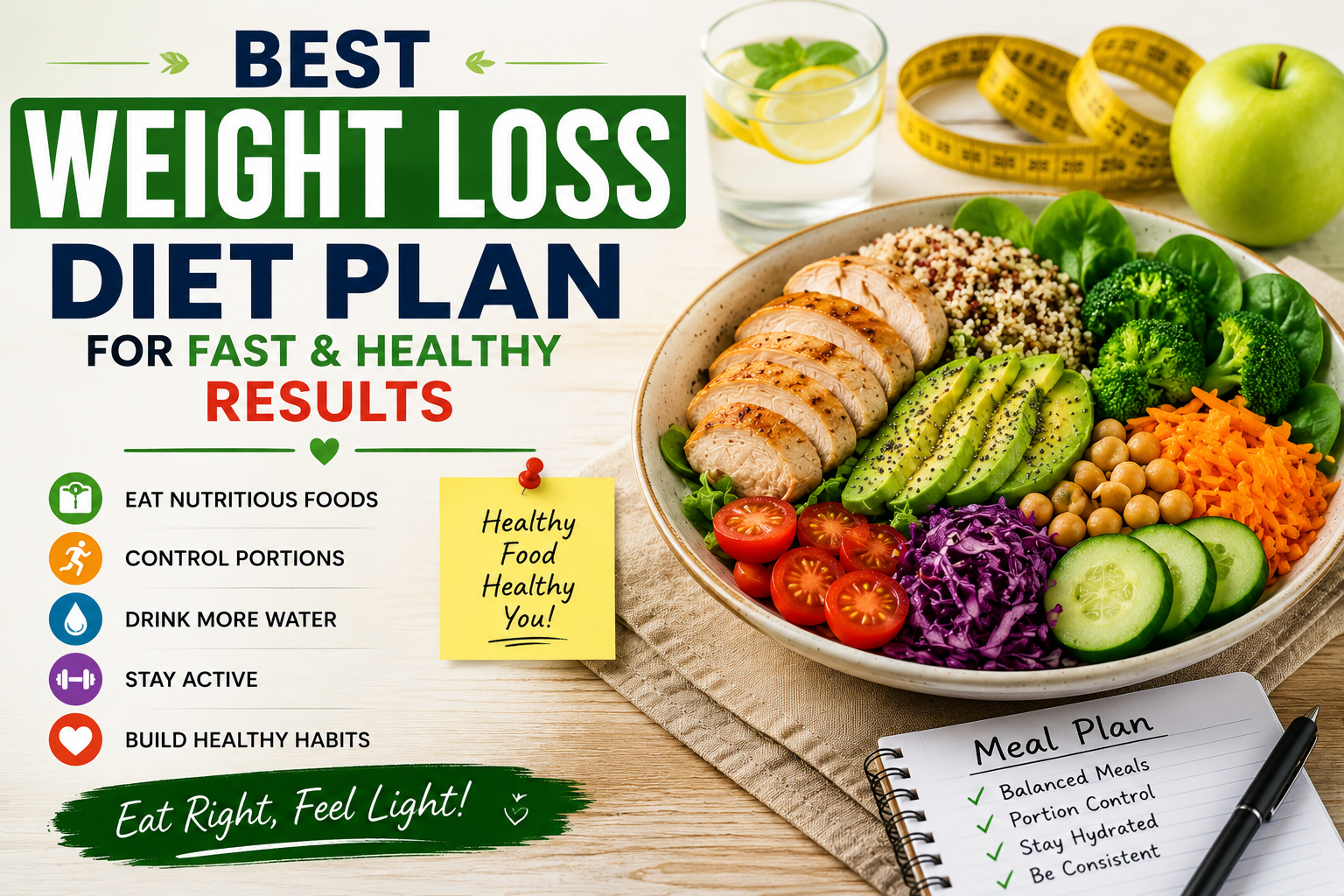
The best weight loss diet plan for fast and healthy results is one that focuses on balanced nutrition, portion control, hydration, and consistency. Avoid extreme diets and instead build sustainable habits that you can maintain for life.
By eating more protein, vegetables, fruits, and whole grains while limiting processed foods and sugary drinks, you can create a healthy calorie deficit and achieve lasting weight loss.
Start with small changes, stay patient, and remember that every healthy choice moves you closer to your goal.