Introduction
Losing weight doesn’t mean starving yourself or following strict diets. The secret to healthy and sustainable weight loss is choosing the right foods. Certain foods can help reduce hunger, boost metabolism, and keep you feeling full for longer periods.
When you include nutrient-rich foods in your daily meals, losing weight becomes easier and more enjoyable. These foods provide essential vitamins, minerals, protein, and fiber while helping you maintain a calorie deficit.
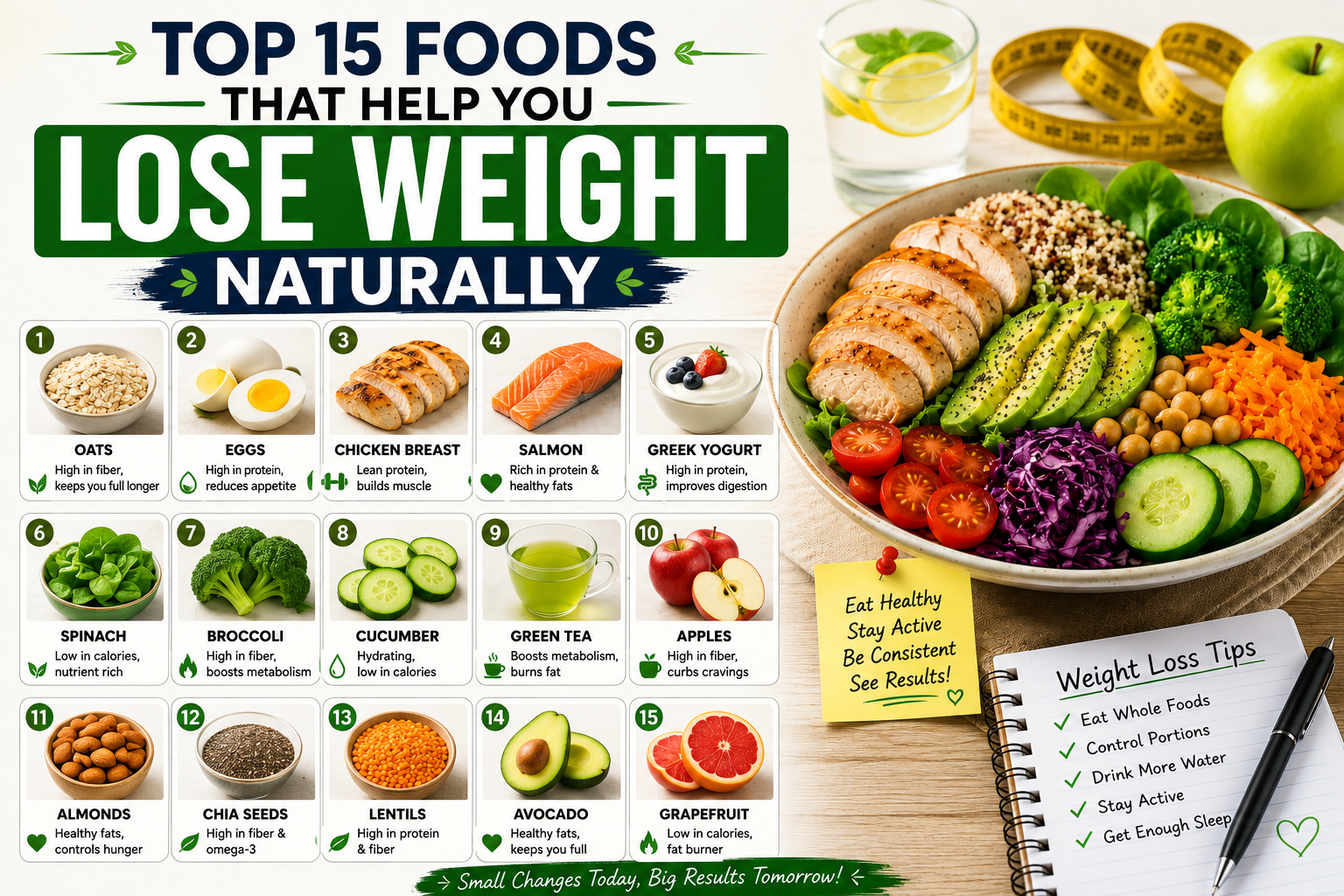
In this article, we’ll explore the top 15 foods that help you lose weight naturally and support long-term health.
Why Food Choice Matters for Weight Loss
Many people focus only on calories, but the quality of food is equally important.
The best foods for weight loss:
- Keep you full longer
- Reduce cravings
- Support metabolism
- Provide essential nutrients
- Help maintain muscle mass
Choosing healthy foods can make weight loss easier without feeling deprived.
1. Eggs
Eggs are one of the best foods for weight loss.
Benefits include:
- High-quality protein
- Keeps you full for hours
- Low in calories
- Rich in nutrients
Studies show that eating eggs for breakfast may help reduce calorie intake throughout the day.
Best ways to eat eggs:
- Boiled eggs
- Scrambled eggs
- Vegetable omelets
2. Oatmeal
Oatmeal is an excellent breakfast option for people trying to lose weight.
Benefits:
- High in fiber
- Helps control hunger
- Supports digestion
- Provides steady energy
Avoid flavored oatmeal packets that contain added sugar.
Choose plain oats and add fruits for natural sweetness.
3. Greek Yogurt
Greek yogurt contains more protein than regular yogurt.
Benefits:
- Promotes fullness
- Supports muscle maintenance
- Contains probiotics
- Improves digestion
Choose unsweetened varieties to avoid unnecessary sugar.
4. Apples
Apples are low in calories and rich in fiber.
Benefits:
- Helps reduce appetite
- Easy healthy snack
- Naturally sweet
- Supports digestion
Eating an apple before meals may help reduce overall calorie intake.
5. Berries
Berries are packed with antioxidants and fiber.
Popular choices include:
- Strawberries
- Blueberries
- Raspberries
- Blackberries
Benefits:
- Low calorie
- High nutrient content
- Helps control sweet cravings
Berries are perfect for smoothies and healthy snacks.
6. Leafy Green Vegetables
Leafy greens are among the most weight-loss-friendly foods available.
Examples:
- Spinach
- Kale
- Lettuce
- Cabbage
Benefits:
- Very low calories
- High fiber
- Rich in vitamins and minerals
These vegetables add volume to meals without adding many calories.
7. Broccoli
Broccoli is a nutritional powerhouse.
Benefits:
- High fiber content
- Low calorie
- Supports digestion
- Rich in antioxidants
Steamed broccoli makes an excellent side dish for weight loss meals.
8. Chicken Breast
Chicken breast is one of the best lean protein sources.
Benefits:
- High protein
- Low fat
- Helps preserve muscle
- Keeps you full longer
Grilled or baked chicken is healthier than fried versions.
9. Fish
Fish provides protein and healthy fats.
Best options:
- Salmon
- Tuna
- Sardines
- Mackerel
Benefits:
- Supports heart health
- High-quality protein
- Rich in omega-3 fatty acids
Fish can be an excellent addition to a weight loss diet plan.
10. Beans and Lentils
Beans and lentils are affordable and highly nutritious.
Benefits:
- Rich in fiber
- High in protein
- Supports digestion
- Helps control appetite
Examples include:
- Kidney beans
- Black beans
- Chickpeas
- Lentils
These foods are especially useful for vegetarians.
11. Avocados
Avocados contain healthy fats that support weight management.
Benefits:
- Promotes fullness
- Rich in nutrients
- Supports heart health
Because avocados are calorie-dense, moderation is important.
12. Nuts
Nuts can be a healthy snack when eaten in reasonable amounts.
Examples:
- Almonds
- Walnuts
- Pistachios
Benefits:
- Healthy fats
- Protein
- Fiber
A small handful can help reduce hunger between meals.
13. Chia Seeds
Chia seeds absorb water and expand in the stomach.
Benefits:
- High fiber
- Rich in omega-3 fats
- Supports digestion
- Promotes fullness
Add chia seeds to:
- Smoothies
- Yogurt
- Oatmeal
14. Green Tea
Although technically a beverage, green tea can support weight loss.
Benefits:
- Contains antioxidants
- Supports metabolism
- Low calorie
Replacing sugary drinks with green tea can help reduce calorie intake.
15. Watermelon
Watermelon is a refreshing fruit with high water content.
Benefits:
- Low calorie
- Hydrating
- Naturally sweet
It can satisfy sugar cravings while helping you stay within your calorie goals.
Sample Weight Loss Meal Plan Using These Foods
Breakfast
- Oatmeal with berries
- Greek yogurt
- Green tea
Mid-Morning Snack
- Apple
Lunch
- Grilled chicken breast
- Broccoli
- Salad
Afternoon Snack
- Handful of almonds
Dinner
- Baked fish
- Mixed vegetables
- Lentils
Evening Snack
- Watermelon slices
This simple meal plan includes many of the foods discussed above.
Foods That Can Slow Weight Loss
While adding healthy foods is important, reducing unhealthy foods also matters.
Limit:
- Sugary drinks
- Fast food
- Chips
- Candy
- Pastries
- Processed snacks
These foods are often high in calories and low in nutrition.
Tips for Getting the Best Results
Focus on Protein
Protein helps reduce hunger and preserve muscle mass.
Increase Fiber Intake
Fiber slows digestion and improves fullness.
Stay Hydrated
Drink water throughout the day.
Control Portions
Even healthy foods should be eaten in appropriate amounts.
Stay Active
Combine healthy eating with regular exercise for better results.
Common Mistakes
Many people make these mistakes:
- Eating too many “healthy” snacks
- Drinking calories
- Skipping meals
- Following extreme diets
- Not eating enough protein
Avoiding these mistakes can help improve weight loss success.
Final Thoughts
The best foods for weight loss are those that keep you satisfied, provide essential nutrients, and support healthy eating habits. Eggs, oatmeal, Greek yogurt, fruits, vegetables, lean proteins, and healthy fats can all play an important role in your weight loss journey.
Instead of focusing on restrictive diets, build meals around these nutrient-dense foods and create habits you can maintain long term. Consistency, balanced nutrition, and regular physical activity remain the keys to successful and sustainable weight loss.