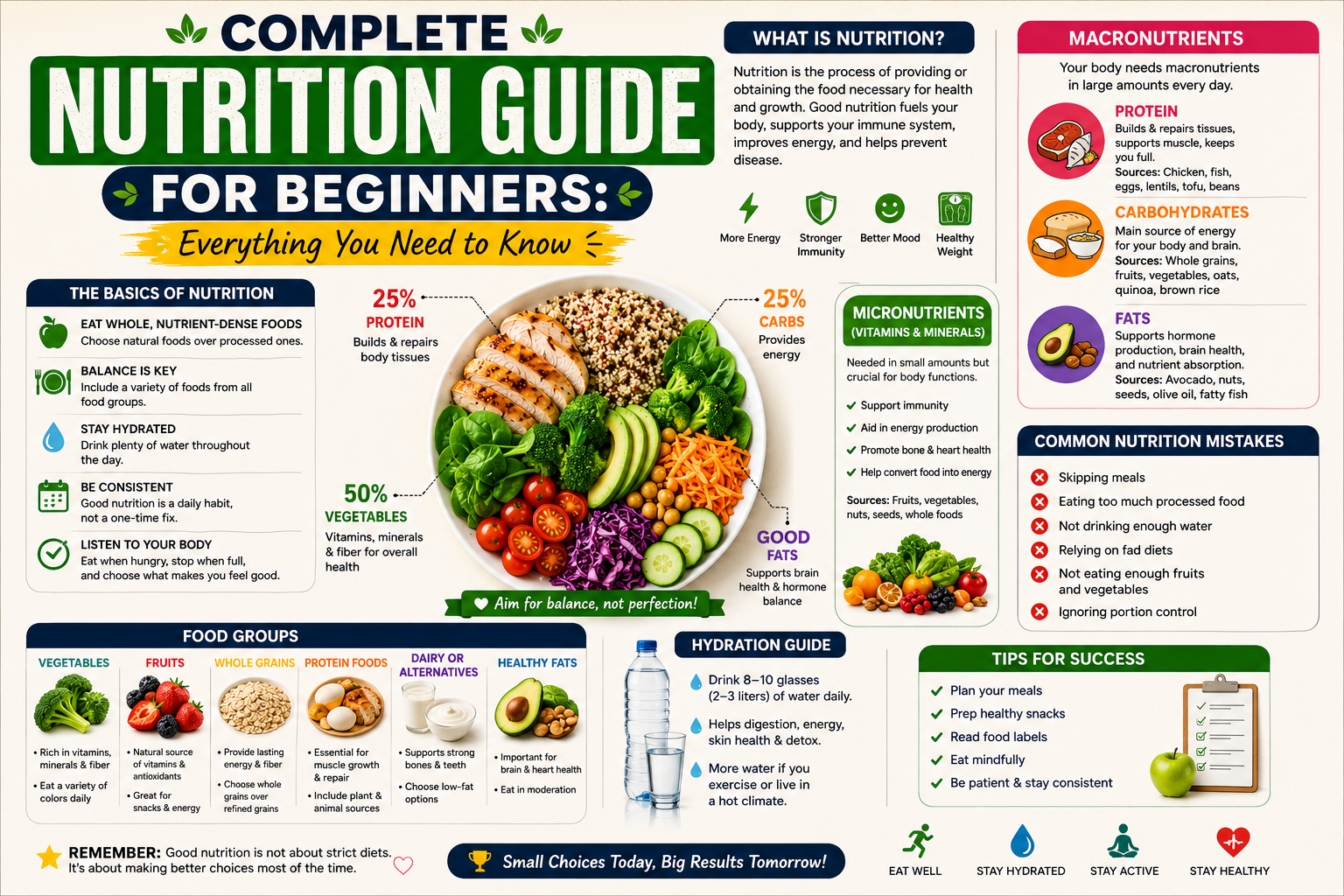
Introduction
Nutrition plays a vital role in maintaining good health and improving overall well-being. The food we eat provides our bodies with the energy and nutrients needed to function properly. However, with so much information available online, many beginners find nutrition confusing Nutrition Guide.
Some people believe healthy eating means following strict diets or avoiding their favorite foods. In reality, good nutrition is about balance, variety, and making smarter food choices.
This complete Nutrition Guide for beginners will help you understand the basics of Nutrition Guide, the essential nutrients your body needs, and practical tips for building healthy eating habits.
What Is Nutrition?
Nutrition is the process by which your body uses food to grow, repair tissues, produce energy, and maintain health.
Every food you eat contains nutrients that support different functions in your body. When you consume a balanced diet, your body receives the nutrients it needs to perform at its best Nutrition Guide.
Good nutrition helps:
- Maintain a healthy weight
- Improve energy levels
- Support immune function
- Strengthen bones and muscles
- Reduce the risk of chronic diseases
Why Is Good Nutrition Important?
Healthy nutrition affects nearly every part of your body.
Provides Energy
Food acts as fuel for your body. Without proper nutrition, you may feel tired and weak.
Supports Growth and Repair
Your body constantly repairs cells and tissues. Nutrients help support this process.
Strengthens the Immune System
A healthy diet helps your body fight infections and illnesses.
Reduces Disease Risk
Good nutrition may lower the risk of:
- Heart disease
- Type 2 diabetes
- High blood pressure
- Obesity
Improves Mental Health
Certain nutrients support brain function and mood regulation.
Understanding Macronutrients
Macronutrients are nutrients your body needs in large amounts.
There are three main macronutrients:
1. Carbohydrates
Carbohydrates are your body’s primary source of energy.
Healthy carbohydrate sources include:
- Fruits
- Vegetables
- Oats
- Brown rice
- Whole grain bread
Carbohydrates provide energy for daily activities and exercise.
Simple Carbohydrates
Examples:
- Sugar
- Candy
- Soft drinks
These provide quick energy but often lack nutrients.
Complex Carbohydrates
Examples:
- Oats
- Brown rice
- Sweet potatoes
These provide longer-lasting energy and contain more fiber.
2. Protein
Protein is essential for building and repairing tissues.
Benefits of protein:
- Muscle growth
- Immune support
- Improved fullness
Healthy protein sources include:
- Chicken
- Fish
- Eggs
- Beans
- Lentils
- Greek yogurt
Protein should be included in every meal.
3. Healthy Fats
Fats often have a bad reputation, but healthy fats are important for overall health.
Benefits include:
- Hormone production
- Brain function
- Nutrient absorption
Healthy fat sources:
- Avocados
- Olive oil
- Nuts
- Seeds
- Fatty fish
Choose healthy fats while limiting trans fats and excessive saturated fats.
Understanding Micronutrients
Micronutrients are nutrients needed in smaller amounts but are equally important.
They include:
Vitamins
Vitamins help regulate many body functions.
Important vitamins include:
- Vitamin A
- Vitamin C
- Vitamin D
- Vitamin E
- Vitamin K
Minerals
Minerals support various processes in the body.
Examples include:
- Calcium
- Iron
- Zinc
- Magnesium
- Potassium
Eating a variety of foods helps ensure adequate vitamin and mineral intake.
What Is a Balanced Diet?
A balanced diet includes the right combination of nutrients from different food groups.
A healthy plate should contain:
Half the Plate
- Vegetables
- Fruits
One Quarter
- Lean protein
One Quarter
- Whole grains
This simple approach helps ensure nutritional balance.
The Importance of Fiber
Fiber is a type of carbohydrate that supports digestive health.
Benefits of fiber include:
- Improved digestion
- Better blood sugar control
- Increased fullness
- Heart health support
High-fiber foods include:
- Fruits
- Vegetables
- Oats
- Beans
- Whole grains
Adults should aim to include fiber-rich foods daily.
The Importance of Water
Water is one of the most important nutrients.
Benefits include:
- Hydration
- Digestion support
- Temperature regulation
- Nutrient transportation
Many people do not drink enough water throughout the day.
General recommendation:
- 2–3 liters daily
Water needs may vary depending on activity level and climate.
Healthy Eating Habits for Beginners
Learning healthy habits can make nutrition easier and more sustainable.
Eat Regular Meals
Skipping meals can lead to overeating later.
Try to maintain consistent meal times.
Include Protein in Every Meal
Protein helps keep you full and supports muscle health.
Eat More Vegetables
Vegetables provide vitamins, minerals, and fiber with relatively few calories.
Limit Processed Foods
Highly processed foods often contain:
- Added sugar
- Excess salt
- Unhealthy fats
Choose whole foods whenever possible.
Read Nutrition Labels
Nutrition labels help you understand what you’re eating.
Pay attention to:
- Calories
- Sugar
- Protein
- Fiber
- Serving size
Foods to Include in a Healthy Diet
Fruits
Examples:
- Apples
- Oranges
- Bananas
- Berries
Vegetables
Examples:
- Broccoli
- Spinach
- Carrots
- Bell peppers
Whole Grains
Examples:
- Brown rice
- Oats
- Whole wheat bread
Lean Proteins
Examples:
- Chicken
- Fish
- Eggs
- Beans
Healthy Fats
Examples:
- Nuts
- Seeds
- Avocados
- Olive oil
Foods to Limit
Certain foods should be consumed in moderation.
Sugary Drinks
Examples:
- Soda
- Energy drinks
Fast Food
Often high in calories and unhealthy fats.
Processed Snacks
Examples:
- Chips
- Cookies
- Candy
Excessive Added Sugar
Too much sugar can contribute to weight gain and health problems.
Sample Healthy Meal Plan
Breakfast
- Oatmeal with berries
- Boiled egg
- Water
Morning Snack
- Apple
Lunch
- Grilled chicken
- Brown rice
- Mixed vegetables
Afternoon Snack
- Greek yogurt
Dinner
- Fish
- Salad
- Steamed vegetables
This simple meal plan provides a good balance of nutrients.
Common Nutrition Mistakes
Many beginners make these mistakes:
Skipping Breakfast
Can lead to increased hunger later.
Not Drinking Enough Water
Hydration is essential for health.
Eating Too Much Processed Food
Processed foods often provide fewer nutrients.
Ignoring Portion Sizes
Even healthy foods should be consumed in appropriate amounts.
Following Fad Diets
Extreme diets are usually difficult to maintain.
Nutrition and Weight Management
Good nutrition is one of the most important factors in maintaining a healthy weight.
Healthy eating can:
- Reduce overeating
- Improve energy
- Support fat loss
- Prevent weight gain
Focus on long-term habits rather than quick fixes.
Tips for Long-Term Success
Start Small
Make gradual improvements instead of changing everything at once.
Plan Your Meals
Meal planning helps reduce unhealthy choices.
Stay Consistent
Healthy habits practiced consistently produce lasting results.
Be Patient
Nutrition improvements take time.
Focus on Progress
Small improvements can lead to significant health benefits over time.
Final Thoughts
Nutrition does not need to be complicated. By understanding the basics of carbohydrates, protein, fats, vitamins, minerals, fiber, and hydration, you can make better food choices and improve your overall health.
The key to success is balance. Eat a variety of nutritious foods, stay hydrated, limit processed foods, and focus on building sustainable habits. With consistency and patience, good nutrition can help you feel healthier, more energetic, and better prepared for a lifetime of wellness Nutrition Guide.