Introduction
Eating healthy is one of the most important steps you can take to improve your overall well-being. The foods you eat provide the nutrients your body needs to function properly, maintain energy levels, support immunity, and prevent disease. Choosing nutrient-rich foods can help you feel more energetic, stay active, and enjoy better health throughout your life.
Nutrient-rich foods are foods that provide a high amount of vitamins, minerals, protein, healthy fats, and other essential nutrients while containing relatively few calories. These foods help your body perform at its best and support both physical and mental health.
In this guide, you will learn about the best nutrient-rich foods for better health and energy, their benefits, and simple ways to include them in your daily diet.
What Are Nutrient-Rich Foods?
Nutrient-rich foods, often called nutrient-dense foods, provide a large amount of nutrients compared to the number of calories they contain.
These foods are rich in:
- Vitamins
- Minerals
- Protein
- Fiber
- Healthy fats
- Antioxidants
Examples include fruits, vegetables, lean proteins, whole grains, nuts, seeds, and dairy products.
Eating nutrient-rich foods regularly can help maintain a healthy weight, improve energy levels, and reduce the risk of chronic diseases.
Why Nutrient-Rich Foods Matter
Your body needs a variety of nutrients every day to perform important functions such as:
- Producing energy
- Building muscles
- Supporting brain health
- Strengthening immunity
- Maintaining healthy bones
- Repairing tissues
When your diet lacks essential nutrients, you may experience:
- Fatigue
- Weakness
- Poor concentration
- Frequent illness
- Low energy levels
A nutrient-rich diet helps your body stay strong and healthy.
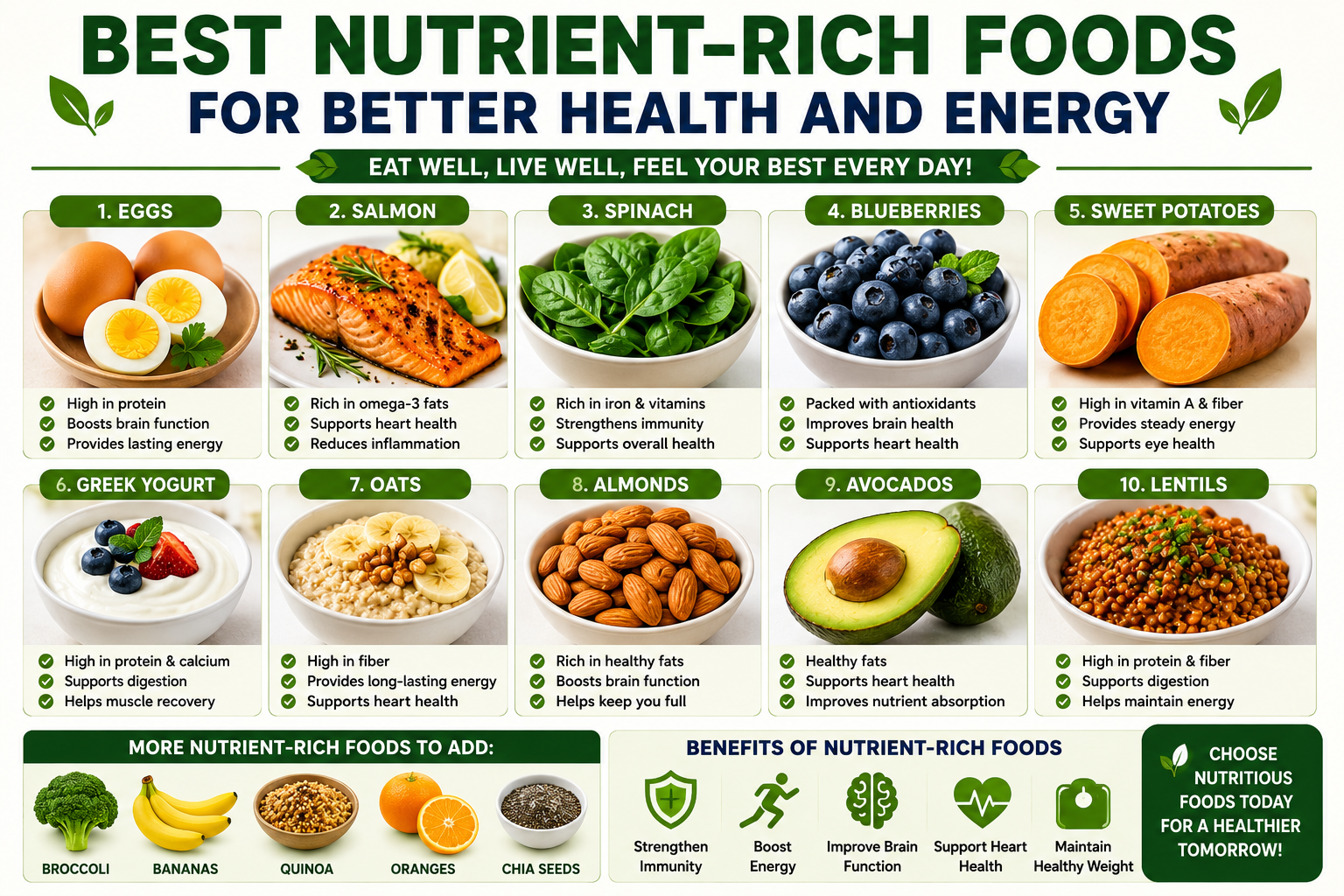
1. Eggs
Eggs are among the most nutritious foods available. They are packed with high-quality protein, vitamins, and minerals.
Benefits of Eggs
- Support muscle growth
- Improve brain function
- Help keep you full longer
- Provide long-lasting energy
Key Nutrients
- Protein
- Vitamin B12
- Vitamin D
- Choline
- Selenium
A healthy breakfast with eggs can help you stay energized throughout the day.
2. Salmon
Salmon is a nutrient-rich fish known for its healthy omega-3 fatty acids.
Benefits of Salmon
- Supports heart health
- Improves brain function
- Reduces inflammation
- Promotes healthy skin
Key Nutrients
- Omega-3 fats
- Protein
- Vitamin D
- Vitamin B12
- Potassium
Experts often recommend eating fatty fish at least twice a week.
3. Spinach
Spinach is one of the healthiest leafy green vegetables.
Benefits of Spinach
- Supports healthy blood circulation
- Strengthens immunity
- Promotes eye health
- Helps maintain energy levels
Key Nutrients
- Iron
- Vitamin A
- Vitamin C
- Vitamin K
- Magnesium
Spinach can easily be added to salads, smoothies, and cooked meals.
4. Blueberries
Blueberries are small fruits packed with powerful antioxidants.
Benefits of Blueberries
- Improve brain health
- Support heart health
- Protect cells from damage
- Enhance memory
Key Nutrients
- Vitamin C
- Fiber
- Antioxidants
- Manganese
Blueberries make a healthy snack and can be added to yogurt or oatmeal.
5. Sweet Potatoes
Sweet potatoes are a delicious and nutritious source of healthy carbohydrates.
Benefits of Sweet Potatoes
- Provide sustained energy
- Support eye health
- Improve digestion
- Boost immunity
Key Nutrients
- Vitamin A
- Vitamin C
- Fiber
- Potassium
Unlike refined carbohydrates, sweet potatoes release energy gradually.
6. Greek Yogurt
Greek yogurt contains more protein than regular yogurt and supports digestive health.
Benefits of Greek Yogurt
- Supports muscle recovery
- Improves digestion
- Strengthens bones
- Helps manage hunger
Key Nutrients
- Protein
- Calcium
- Probiotics
- Vitamin B12
Choose plain Greek yogurt to avoid added sugars.
7. Oats
Oats are one of the best whole grains for energy and overall health.
Benefits of Oats
- Provide steady energy
- Improve heart health
- Support digestion
- Help control blood sugar
Key Nutrients
- Fiber
- Protein
- Magnesium
- Iron
Oatmeal is a healthy breakfast choice that keeps you full for hours.
8. Almonds
Almonds are nutrient-rich nuts that offer healthy fats and protein.
Benefits of Almonds
- Improve heart health
- Increase energy
- Support brain function
- Help maintain healthy skin
Key Nutrients
- Vitamin E
- Magnesium
- Protein
- Healthy fats
A handful of almonds makes a convenient and healthy snack.
9. Avocados
Avocados are known for their healthy monounsaturated fats.
Benefits of Avocados
- Support heart health
- Improve nutrient absorption
- Promote healthy skin
- Provide lasting energy
Key Nutrients
- Healthy fats
- Potassium
- Fiber
- Vitamin K
Avocados can be added to salads, sandwiches, and smoothies.
10. Lentils
Lentils are an excellent plant-based source of protein and fiber.
Benefits of Lentils
- Improve digestion
- Support muscle health
- Increase energy levels
- Help maintain healthy blood sugar
Key Nutrients
- Protein
- Iron
- Fiber
- Folate
Lentils are affordable and easy to include in soups and curries.
11. Broccoli
Broccoli is a highly nutritious vegetable packed with vitamins and antioxidants.
Benefits of Broccoli
- Supports immunity
- Promotes healthy digestion
- Protects against cell damage
- Supports bone health
Key Nutrients
- Vitamin C
- Vitamin K
- Fiber
- Folate
Broccoli can be steamed, roasted, or added to salads.
12. Bananas
Bananas are one of the best natural energy foods.
Benefits of Bananas
- Provide quick energy
- Support muscle function
- Improve digestion
- Help maintain hydration
Key Nutrients
- Potassium
- Vitamin B6
- Fiber
- Natural carbohydrates
They are especially popular among athletes for a quick energy boost.
13. Quinoa
Quinoa is a nutrient-rich whole grain that contains all nine essential amino acids.
Benefits of Quinoa
- Supports muscle growth
- Provides long-lasting energy
- Improves digestion
- Helps manage weight
Key Nutrients
- Protein
- Fiber
- Magnesium
- Iron
Quinoa is a great alternative to white rice.
14. Oranges
Oranges are rich in vitamin C and antioxidants.
Benefits of Oranges
- Strengthen immunity
- Improve skin health
- Support hydration
- Increase energy levels
Key Nutrients
- Vitamin C
- Fiber
- Potassium
- Antioxidants
Fresh oranges are a refreshing and healthy snack.
15. Chia Seeds
Chia seeds are tiny but incredibly nutritious.
Benefits of Chia Seeds
- Support heart health
- Improve digestion
- Increase energy
- Help maintain healthy weight
Key Nutrients
- Omega-3 fatty acids
- Fiber
- Protein
- Calcium
They can be added to smoothies, yogurt, and oatmeal.
How Nutrient-Rich Foods Improve Energy
Many people depend on sugary snacks or energy drinks when they feel tired. However, these provide only temporary energy.
Nutrient-rich foods offer sustainable energy because they contain:
- Complex carbohydrates
- Healthy fats
- Protein
- Essential vitamins and minerals
These nutrients help stabilize blood sugar levels and provide a steady supply of energy throughout the day.
Tips for Adding More Nutrient-Rich Foods to Your Diet
Eat a Variety of Foods
Different foods provide different nutrients. Include multiple food groups in your meals.
Fill Half Your Plate with Vegetables
Vegetables provide vitamins, minerals, and fiber with few calories.
Choose Whole Foods
Focus on natural foods rather than highly processed products.
Plan Healthy Snacks
Keep nutritious snacks available such as:
- Fruits
- Nuts
- Yogurt
- Seeds
Stay Hydrated
Water is essential for energy production and overall health.
Common Mistakes to Avoid
Many people make nutrition mistakes that reduce the benefits of healthy eating.
Avoid:
- Skipping meals
- Eating too much processed food
- Consuming excessive sugar
- Ignoring portion sizes
- Drinking too little water
Small improvements in daily eating habits can have a major impact on health.
Conclusion
Choosing the best nutrient-rich foods is one of the most effective ways to improve your health and energy levels. Foods such as eggs, salmon, spinach, blueberries, oats, almonds, avocados, lentils, and other nutrient-dense options provide essential vitamins, minerals, protein, and healthy fats that support your body every day.
By including a variety of nutrient-rich foods in your diet, you can boost energy, strengthen immunity, improve brain function, support heart health, and reduce the risk of chronic diseases. Healthy eating is not about perfection—it is about making better choices consistently. Start adding more nutritious foods to your meals today and enjoy the long-term benefits of a healthier lifestyle.
The Importance of Nutrition: How Healthy Eating Improves Your Life