Introduction
Good nutrition is the foundation of a healthy lifestyle. The foods and drinks you consume every day affect your energy levels, physical health, mental well-being, and overall quality of life. While many people focus on diet trends and quick fixes, the truth is that healthy eating is about building sustainable habits that support your body over the long term.
Nutrition does not need to be complicated. By making simple improvements to your daily eating habits, you can enjoy better health, increased energy, and a lower risk of chronic diseases.
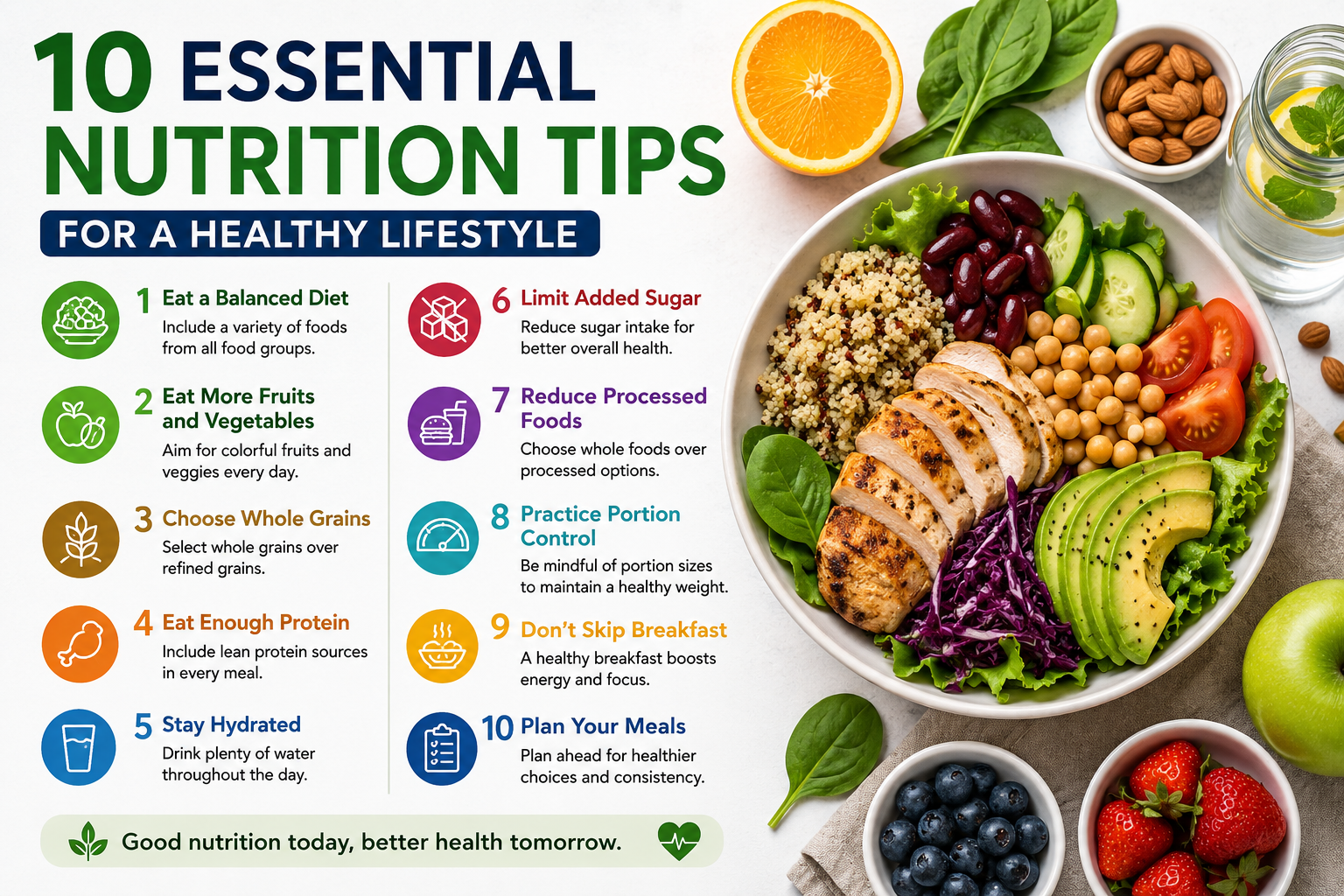
In this guide, we will discuss 10 essential nutrition tips that can help you create a healthier lifestyle and improve your overall well-being.
Why Nutrition Matters
Nutrition provides your body with the nutrients it needs to function properly. Every cell, organ, and system depends on the food you eat.
Good nutrition helps:
- Improve energy levels
- Support brain function
- Strengthen the immune system
- Maintain a healthy weight
- Promote healthy aging
- Reduce disease risk
Developing healthy eating habits today can lead to long-term health benefits.
1. Eat a Balanced Diet
One of the most important nutrition tips is to eat a balanced diet.
A balanced diet includes:
- Fruits
- Vegetables
- Whole grains
- Lean proteins
- Healthy fats
Each food group provides unique nutrients that support different functions in the body.
A simple rule is to fill:
- Half your plate with fruits and vegetables
- One-quarter with protein
- One-quarter with whole grains
This approach helps ensure balanced nutrition.
2. Include More Fruits and Vegetables
Fruits and vegetables are rich in vitamins, minerals, antioxidants, and fiber.
Benefits include:
- Better digestion
- Stronger immunity
- Lower disease risk
- Improved heart health
Healthy choices include:
- Apples
- Oranges
- Bananas
- Berries
- Spinach
- Broccoli
- Carrots
Aim to include fruits and vegetables in every meal whenever possible.
3. Choose Whole Grains Over Refined Grains
Whole grains contain more nutrients and fiber than refined grains.
Examples of whole grains:
- Brown rice
- Oats
- Whole wheat bread
- Quinoa
Refined grains often lose important nutrients during processing.
Whole grains help:
- Maintain energy
- Improve digestion
- Support heart health
- Increase fullness
Replacing white bread and white rice with whole-grain options is a simple improvement.
4. Eat Enough Protein
Protein is essential for:
- Muscle growth
- Tissue repair
- Hormone production
- Immune function
Protein also helps you feel full longer, which may support healthy weight management.
Healthy protein sources include:
- Chicken
- Fish
- Eggs
- Greek yogurt
- Beans
- Lentils
- Tofu
Try to include protein in every meal.
5. Stay Hydrated
Water is one of the most important nutrients for your body.
Benefits of proper hydration include:
- Better digestion
- Improved concentration
- Temperature regulation
- Healthy skin
- Increased energy
Many people do not drink enough water daily.
General recommendations:
- About 2–3 liters per day
Your needs may vary depending on activity levels and weather conditions.
6. Limit Added Sugar
Too much added sugar can contribute to:
- Weight gain
- Tooth decay
- Type 2 diabetes
- Heart disease
Common sources of added sugar include:
- Soft drinks
- Candy
- Pastries
- Sweetened coffee drinks
Instead, choose naturally sweet foods like fruits.
Reading nutrition labels can help identify hidden sugars in packaged foods.
7. Reduce Processed Foods
Processed foods are often high in:
- Added sugar
- Sodium
- Unhealthy fats
Examples include:
- Chips
- Fast food
- Instant noodles
- Packaged snacks
Eating too many processed foods may negatively affect health.
Whenever possible, choose whole foods such as:
- Fresh fruits
- Vegetables
- Whole grains
- Lean proteins
These foods provide more nutrients and fewer unnecessary additives.
8. Practice Portion Control
Even healthy foods can contribute to weight gain if eaten in large amounts.
Portion control helps manage calorie intake without strict dieting.
Simple strategies include:
- Using smaller plates
- Eating slowly
- Avoiding distractions during meals
- Listening to hunger signals
Mindful eating can improve satisfaction and reduce overeating.
9. Don’t Skip Breakfast
Breakfast provides energy after an overnight fast.
A healthy breakfast may:
- Improve concentration
- Support metabolism
- Reduce hunger later in the day
Nutritious breakfast ideas include:
- Oatmeal with fruit
- Eggs and whole wheat toast
- Greek yogurt with berries
Starting the day with a balanced meal can support healthy eating habits.
10. Plan Your Meals
Meal planning is one of the most effective ways to improve nutrition.
Benefits include:
- Better food choices
- Reduced food waste
- Less reliance on fast food
- Easier portion control
Helpful meal-planning tips:
- Create a weekly menu
- Prepare meals in advance
- Keep healthy snacks available
- Shop with a grocery list
Planning ahead makes healthy eating much easier.
The Importance of Fiber
Fiber is an important nutrient often overlooked in modern diets.
Benefits include:
- Improved digestion
- Better blood sugar control
- Increased fullness
- Heart health support
High-fiber foods include:
- Oats
- Fruits
- Vegetables
- Beans
- Whole grains
Including fiber-rich foods daily can improve overall health.
Healthy Snack Ideas
Choosing healthy snacks can help maintain energy levels throughout the day.
Examples include:
- Apple slices
- Greek yogurt
- Nuts
- Carrot sticks
- Boiled eggs
- Fresh fruit
Healthy snacks can prevent excessive hunger between meals.
Common Nutrition Mistakes
Many people unknowingly make mistakes that affect their nutrition.
Skipping Meals
Can lead to overeating later.
Drinking Calories
Sugary drinks add calories without providing fullness.
Ignoring Water Intake
Hydration is essential for overall health.
Following Extreme Diets
Restrictive diets are often difficult to maintain.
Eating Too Fast
Fast eating may lead to overeating before your body signals fullness.
Avoiding these mistakes can improve your results.
Nutrition and Long-Term Health
Healthy eating is not only about appearance or weight management.
Good nutrition can help:
- Improve heart health
- Strengthen bones
- Support brain function
- Increase lifespan
- Improve quality of life
Small improvements made consistently can produce significant long-term benefits.
Building Healthy Habits
Creating healthy nutrition habits takes time.
Start by making one change at a time:
- Drink more water
- Add vegetables to meals
- Reduce sugary drinks
- Eat more protein
Small changes are often easier to maintain than drastic lifestyle changes.
Final Thoughts
Good nutrition is one of the most powerful tools for improving health and well-being. By following these 10 essential nutrition tips, you can develop healthier eating habits, increase your energy levels, and reduce the risk of chronic diseases.
Remember that healthy eating is not about perfection. Focus on making consistent improvements, choosing nutrient-rich foods, staying hydrated, and building habits that you can maintain for life. Over time, these small steps can lead to lasting health benefits and a healthier lifestyle nutrition tips.