Introduction
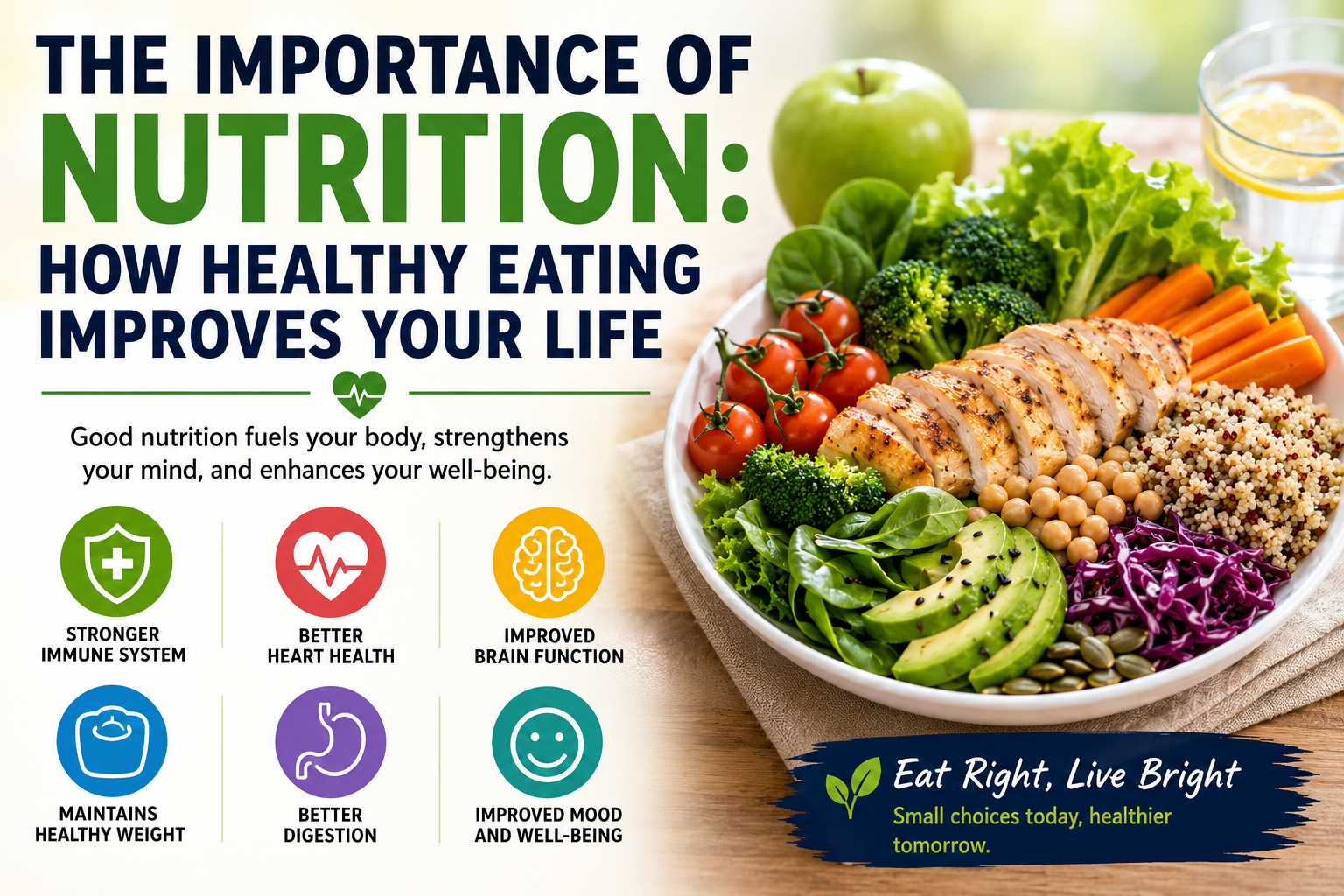
Nutrition plays a vital role in maintaining a healthy and happy life. The food we eat provides the energy and nutrients our bodies need to function properly. Good nutrition helps us stay active, strengthens our immune system, improves mental health, and reduces the risk of many diseases.
In today’s fast-paced world, many people rely on fast food and processed meals because they are convenient. However, these foods often lack essential nutrients and can negatively affect our health over time. Understanding the importance of nutrition can help you make better food choices and improve your overall well-being.
This article explains why importance nutrition matters, the benefits of healthy eating, and simple ways to improve your daily diet.
What Is Nutrition?
Nutrition is the process of getting and using nutrients from food. These nutrients help the body grow, repair tissues, produce energy, and maintain overall health.
The main nutrients include:
1. Carbohydrates
Carbohydrates are the body’s primary source of energy. They are found in foods such as:
- Rice
- Bread
- Oats
- Potatoes
- Fruits
2. Proteins
Proteins help build and repair muscles, tissues, and organs.
Sources of protein include:
- Chicken
- Fish
- Eggs
- Beans
- Lentils
- Dairy products
3. Healthy Fats
Healthy fats support brain function and help absorb vitamins.
Examples include:
- Avocados
- Nuts
- Seeds
- Olive oil
- Fatty fish
4. Vitamins
Vitamins help the body perform important functions and maintain health.
Examples:
- Vitamin A for vision
- Vitamin C for immunity
- Vitamin D for bone health
5. Minerals
Minerals help support various body functions.
Important minerals include:
- Calcium
- Iron
- Magnesium
- Potassium
6. Water
Water is essential for survival. It regulates body temperature, transports nutrients, and removes waste from the body.
Why Is Nutrition Important?
Good nutrition affects every part of your body. Without proper nutrients, the body cannot function efficiently.
Provides Energy
Food is fuel for the body. Healthy foods provide steady energy throughout the day, helping you stay productive and active.
Poor eating habits often lead to tiredness, weakness, and lack of concentration.
Supports Growth and Development
Children and teenagers need proper nutrition for healthy growth and development. Adults also require nutrients to maintain muscle mass and support body functions.
Strengthens the Immune System
A balanced diet helps your body fight infections and illnesses. Nutrient-rich foods contain vitamins and minerals that support immune health.
People who eat healthy foods regularly often recover faster from common illnesses.
Maintains Healthy Weight
Good nutrition helps manage body weight naturally. Eating balanced meals reduces overeating and unhealthy cravings.
Maintaining a healthy weight lowers the risk of obesity-related diseases.
Benefits of Healthy Eating
1. Better Heart Health
Heart disease is one of the leading causes of death worldwide. Healthy eating can reduce the risk of heart problems.
Heart-friendly foods include:
- Fruits
- Vegetables
- Whole grains
- Nuts
- Fish
Limiting processed foods, excess salt, and sugary drinks also supports heart health.
2. Improved Brain Function
The brain requires nutrients to function properly. Healthy eating can improve:
- Memory
- Focus
- Learning ability
- Mental performance
Foods rich in omega-3 fatty acids, such as fish and walnuts, are especially beneficial for brain health.
3. Stronger Bones and Teeth
Calcium and vitamin D help maintain strong bones and teeth.
Good sources include:
- Milk
- Yogurt
- Cheese
- Leafy green vegetables
Strong bones reduce the risk of fractures and osteoporosis later in life.
4. Better Digestive Health
Fiber-rich foods improve digestion and support a healthy gut.
Foods high in fiber include:
- Fruits
- Vegetables
- Whole grains
- Beans
A healthy digestive system helps your body absorb nutrients effectively.
5. Healthier Skin
Nutrition affects skin appearance and health.
Foods rich in vitamins and antioxidants can help:
- Reduce skin damage
- Improve skin texture
- Support natural skin repair
Drinking enough water also keeps the skin hydrated and healthy.
6. Improved Mental Health
Research shows that healthy eating can positively affect mood and mental well-being.
Nutritious foods may help reduce:
- Stress
- Anxiety
- Mood swings
A balanced diet supports stable energy levels and emotional health.
Common Problems Caused by Poor Nutrition
Poor nutrition can lead to many health problems.
Obesity
Consuming too many calories from unhealthy foods can cause excessive weight gain.
Diabetes
High sugar intake increases the risk of type 2 diabetes.
High Blood Pressure
Excess salt consumption can contribute to hypertension and heart disease.
Weak Immune System
Lack of essential nutrients can make the body more vulnerable to infections.
Nutrient Deficiencies
Poor eating habits may lead to deficiencies in important vitamins and minerals.
Common deficiencies include:
- Iron deficiency
- Vitamin D deficiency
- Calcium deficiency
Healthy Eating Tips
Making small changes can significantly improve your nutrition.
Eat More Fruits and Vegetables
Try to fill half of your plate with fruits and vegetables at every meal.
Choose Whole Grains
Replace refined grains with healthier options such as:
- Brown rice
- Whole wheat bread
- Oatmeal
Include Lean Protein
Choose healthy protein sources like:
- Fish
- Chicken
- Eggs
- Beans
- Lentils
Stay Hydrated
Drink plenty of water throughout the day. Limit sugary beverages and soft drinks.
Reduce Processed Foods
Processed foods often contain excessive amounts of:
- Sugar
- Salt
- Unhealthy fats
Choose fresh and natural foods whenever possible.
Control Portion Sizes
Eating large portions can lead to excess calorie intake. Practice mindful eating and avoid overeating.
Nutrition for Different Age Groups
Children
Children need nutrient-rich foods to support growth and brain development.
Important nutrients include:
- Calcium
- Protein
- Iron
- Vitamins
Teenagers
Teenagers require additional nutrients during rapid growth periods.
Balanced meals support physical development and academic performance.
Adults
Adults need proper nutrition to maintain energy, productivity, and long-term health.
Older Adults
As people age, their nutritional needs change. Older adults should focus on:
- Calcium
- Vitamin D
- Protein
- Fiber
These nutrients help maintain bone health and muscle strength.
The Role of Nutrition in Disease Prevention
Healthy eating is one of the most effective ways to prevent chronic diseases.
Good nutrition can help lower the risk of:
- Heart disease
- Stroke
- Type 2 diabetes
- Certain cancers
- Obesity
A nutritious diet supports overall wellness and improves quality of life.
Building Healthy Eating Habits
Developing healthy habits takes time, but small steps can make a big difference.
Try these strategies:
- Plan meals in advance
- Keep healthy snacks available
- Read food labels
- Cook more meals at home
- Avoid skipping breakfast
Consistency is more important than perfection. Focus on making gradual improvements to your diet.
Conclusion
The importance of nutrition cannot be overstated. Healthy eating provides the nutrients your body needs to function properly, stay energized, and prevent disease. Good importance nutrition supports physical health, mental well-being, strong immunity, healthy weight management, and a better quality of life.
By making smarter food choices and following healthy eating habits, you can improve your overall health and enjoy long-term benefits. Start with small changes today, and your body will thank you for years to come importance nutrition.