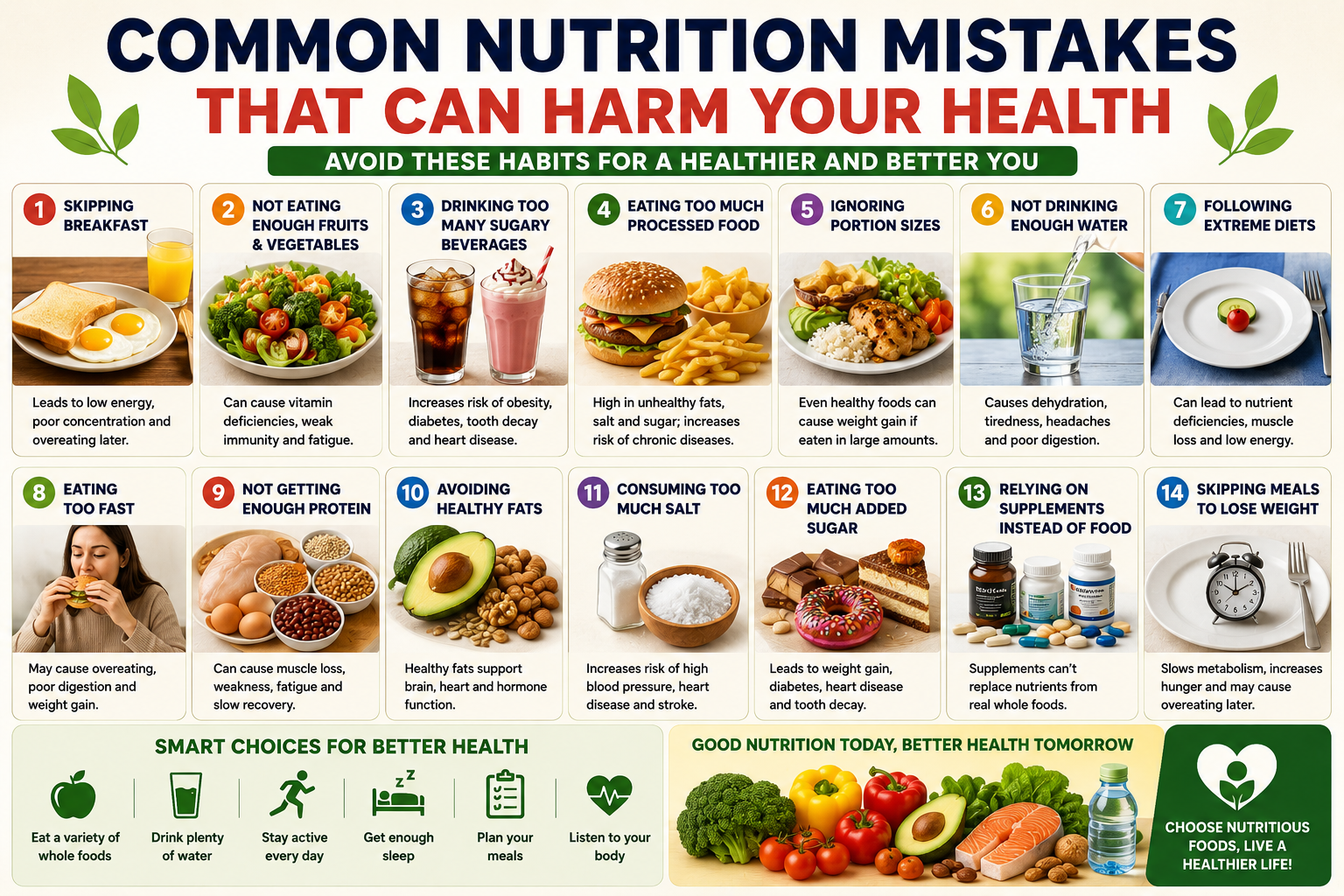
Introduction
Good nutrition is essential for maintaining a healthy body and mind. The foods we eat provide the nutrients needed for energy, growth, immunity, and overall well-being. However, many people make common nutrition mistakes without realizing the negative impact these habits can have on their health.
Even if you think you are eating healthy, certain mistakes can prevent your body from getting the nutrients it needs. Poor eating habits may lead to weight gain, low energy levels, digestive problems, weakened immunity, and an increased risk of chronic diseases.
The good news is that most nutrition mistakes can be corrected with simple lifestyle changes. In this guide, we will discuss the most common nutrition mistakes that can harm your health and how to avoid them.
Why Good Nutrition Matters
Nutrition affects every part of your body. A balanced diet helps:
- Maintain healthy weight
- Improve energy levels
- Strengthen immunity
- Support brain function
- Improve heart health
- Reduce disease risk
When nutrition is poor, the body struggles to function efficiently, leading to both short-term and long-term health problems.
1. Skipping Breakfast
Many people skip breakfast because they are busy or trying to lose weight. However, missing breakfast can negatively affect your health.
Problems Caused by Skipping Breakfast
- Low energy levels
- Reduced concentration
- Increased hunger later in the day
- Overeating at lunch or dinner
A healthy breakfast provides your body with fuel after a long overnight fast.
Better Choice
Choose foods such as:
- Oatmeal
- Eggs
- Greek yogurt
- Fruit
- Whole-grain toast
2. Not Eating Enough Fruits and Vegetables
Fruits and vegetables are rich in vitamins, minerals, antioxidants, and fiber.
Unfortunately, many people consume far less than the recommended amount.
Health Risks
- Weak immune system
- Poor digestion
- Vitamin deficiencies
- Increased disease risk
Better Choice
Aim to include fruits and vegetables in every meal.
3. Drinking Too Many Sugary Beverages
Soft drinks, energy drinks, and sweetened juices often contain large amounts of added sugar.
Health Risks
- Weight gain
- Type 2 diabetes
- Tooth decay
- Increased risk of heart disease
Better Choice
Replace sugary drinks with:
- Water
- Lemon water
- Herbal tea
- Unsweetened beverages
4. Eating Too Much Processed Food
Processed foods are often high in sugar, salt, unhealthy fats, and artificial ingredients.
Examples include:
- Chips
- Fast food
- Packaged snacks
- Sugary cereals
Health Risks
- Obesity
- High blood pressure
- Heart disease
- Poor nutrition
Better Choice
Focus on whole foods such as fruits, vegetables, lean proteins, and whole grains.
5. Ignoring Portion Sizes
Even healthy foods can contribute to weight gain when eaten in excessive amounts.
Common Problems
- Consuming too many calories
- Digestive discomfort
- Unhealthy weight gain
Better Choice
Use smaller plates and eat slowly to recognize fullness signals.
6. Not Drinking Enough Water
Water is essential for almost every function in the body.
Signs of Dehydration
- Fatigue
- Headaches
- Dry skin
- Poor concentration
Better Choice
Drink water regularly throughout the day and increase intake during hot weather or exercise.
7. Following Extreme Diets
Many people try strict diets promising quick weight loss.
Problems with Extreme Diets
- Nutrient deficiencies
- Muscle loss
- Low energy
- Difficulty maintaining results
Better Choice
Follow a balanced and sustainable eating plan instead of restrictive diets.
8. Eating Too Fast
Modern lifestyles often encourage rushed eating habits.
Health Risks
- Overeating
- Poor digestion
- Weight gain
Your brain needs time to recognize that you are full.
Better Choice
Chew food slowly and enjoy meals without distractions.
9. Not Getting Enough Protein
Protein is essential for building and repairing tissues.
Signs of Low Protein Intake
- Muscle weakness
- Fatigue
- Increased hunger
- Slow recovery
Good Protein Sources
- Eggs
- Fish
- Chicken
- Beans
- Lentils
- Dairy products
10. Avoiding Healthy Fats
Some people believe all fats are unhealthy, but healthy fats are important for overall health.
Benefits of Healthy Fats
- Brain support
- Heart health
- Hormone production
- Nutrient absorption
Healthy Fat Sources
- Avocados
- Nuts
- Seeds
- Olive oil
- Fatty fish
11. Consuming Too Much Salt
Excess sodium is common in processed foods and restaurant meals.
Health Risks
- High blood pressure
- Heart disease
- Stroke
- Kidney problems
Better Choice
Use herbs and spices for flavor instead of excessive salt.
12. Eating Too Much Added Sugar
Added sugar is found in many foods, including:
- Soft drinks
- Candy
- Cakes
- Sweetened coffee drinks
Health Risks
- Obesity
- Diabetes
- Heart disease
- Tooth decay
Better Choice
Choose naturally sweet foods like fruits.
13. Relying on Supplements Instead of Food
Supplements can be helpful when recommended by a healthcare professional, but they should not replace healthy food.
Problems
- Missing important nutrients found in whole foods
- Poor dietary habits
- Unbalanced nutrition
Better Choice
Get most nutrients from a balanced diet whenever possible.
14. Skipping Meals to Lose Weight
Many people think skipping meals helps with weight loss.
Why It Doesn’t Work
- Increased hunger
- Overeating later
- Slower metabolism
- Reduced energy
Better Choice
Eat balanced meals at regular intervals.
15. Not Reading Food Labels
Many products marketed as “healthy” may contain large amounts of sugar, sodium, or unhealthy fats.
What to Check
- Calories
- Sugar content
- Sodium levels
- Ingredients list
Reading labels helps you make smarter food choices.
16. Eating Late at Night
Late-night eating often leads to unnecessary calorie intake.
Potential Problems
- Weight gain
- Poor digestion
- Sleep disruption
Better Choice
Try to finish your last meal a few hours before bedtime.
17. Lack of Meal Planning
Without planning, people often choose unhealthy convenience foods.
Benefits of Meal Planning
- Better nutrition
- Less stress
- Improved portion control
- Reduced food waste
Better Choice
Prepare meals and healthy snacks in advance.
Long-Term Effects of Poor Nutrition
Repeated nutrition mistakes can increase the risk of:
- Obesity
- Heart disease
- Type 2 diabetes
- High blood pressure
- Digestive disorders
- Nutrient deficiencies
Over time, these health issues can significantly affect quality of life.
How to Build Better Nutrition Habits
Improving nutrition does not require perfection. Small changes can create significant results.
Healthy Habits to Follow
- Eat more fruits and vegetables
- Choose whole grains
- Drink enough water
- Limit processed foods
- Include lean protein
- Control portion sizes
- Plan meals ahead
- Reduce added sugar
Consistency is the key to long-term success.
Conclusion
Many common nutrition mistakes can harm your health without you even realizing it. Habits such as skipping breakfast, consuming too much sugar, eating processed foods, ignoring portion sizes, and not drinking enough water can lead to serious health problems over time.
The good news is that these mistakes are easy to fix. By making healthier food choices and adopting balanced eating habits, you can improve your energy levels, strengthen your immune system, support heart health, and enjoy a better quality of life. common nutrition mistakes Focus on gradual improvements, stay consistent, and make nutrition a priority every day.