Introduction
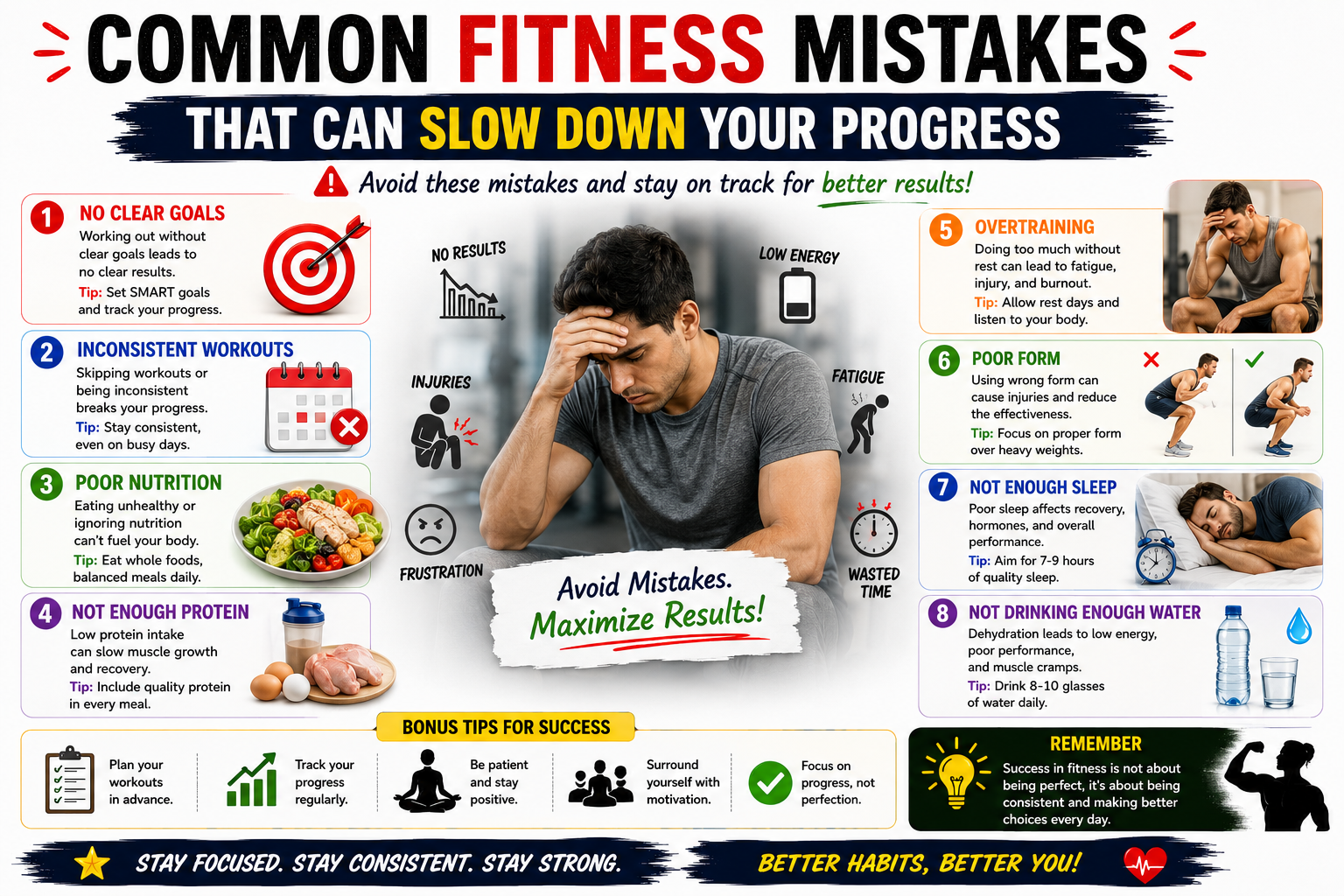
Starting a fitness journey is one of the best decisions you can make for your health. Regular exercise can improve your strength, boost your energy, help with weight management, and reduce the risk of many diseases. However, many people work hard in the gym or follow exercise routines without seeing the results they expect.
The reason is often not a lack of effort but a few common fitness mistakes. These mistakes can slow down your progress, reduce motivation, and make it harder to achieve your fitness goals. Understanding and avoiding these Common Fitness Mistakes can help you get better results and enjoy your fitness journey.
In this article, we will discuss the most common fitness mistakes and how to avoid them.
1. Skipping Warm-Up Exercises
One of the biggest mistakes beginners make is starting a workout without warming up.
A proper warm-up prepares your muscles, joints, and cardiovascular system for exercise. It increases blood flow and reduces the risk of injury.
Better Approach:
- Warm up for 5–10 minutes before exercise.
- Use light cardio such as walking or jogging.
- Perform dynamic stretches before workouts.
A good warm-up can improve your performance and help prevent injuries.
2. Not Having Clear Fitness Goals
Many people start exercising without knowing exactly what they want to achieve.
Without clear goals, it becomes difficult to measure progress and stay motivated.
Better Approach:
Set SMART goals:
- Specific
- Measurable
- Achievable
- Relevant
- Time-bound
Examples:
- Lose 5 kg in 3 months.
- Walk 10,000 steps daily.
- Gain muscle strength within 12 weeks.
Clear goals provide direction and motivation.
3. Doing Too Much Too Soon
Many beginners feel excited and start exercising intensely every day.
This often leads to:
- Fatigue
- Muscle soreness
- Burnout
- Injuries
Fitness is a long-term journey, not a race.
Better Approach:
Start slowly and increase intensity gradually.
For example:
- Begin with 3 workout sessions per week.
- Increase duration and intensity over time.
Consistency is more important than extreme effort.
4. Ignoring Proper Form
Using incorrect exercise form is one of the most dangerous Common Fitness Mistakes.
Poor form can:
- Reduce workout effectiveness
- Cause injuries
- Create muscle imbalances
For example, improper squats can put unnecessary pressure on the knees and lower back.
Better Approach:
- Learn correct techniques before increasing weight.
- Watch professional tutorials.
- Ask a trainer for guidance if possible.
- Focus on quality rather than quantity.
Proper form delivers better results and keeps you safe.
5. Not Getting Enough Rest
Many people think exercising every day without rest will speed up progress.
In reality, muscles grow and recover during rest periods.
Without adequate recovery:
- Performance decreases
- Injury risk increases
- Energy levels drop
Better Approach:
- Take at least 1–2 rest days each week.
- Get 7–9 hours of quality sleep every night.
- Allow muscle groups time to recover.
Recovery is just as important as training.
6. Following an Unhealthy Diet
Exercise alone cannot overcome poor nutrition.
Some people work out regularly but continue eating excessive junk food, sugary drinks, and highly processed foods.
This can limit:
- Weight loss
- Muscle growth
- Energy levels
Better Approach:
Eat a balanced diet that includes:
- Lean protein
- Fruits
- Vegetables
- Whole grains
- Healthy fats
Proper nutrition supports fitness success.
7. Not Drinking Enough Water
Hydration plays a major role in physical performance.
Even mild dehydration can cause:
- Fatigue
- Reduced endurance
- Poor concentration
- Muscle cramps
Better Approach:
- Drink water throughout the day.
- Increase water intake during workouts.
- Monitor urine color as a hydration indicator.
Staying hydrated helps your body perform at its best.
8. Doing the Same Workout Every Day
Repeating the same exercises for months can lead to a fitness plateau.
Your body adapts to repeated movements, making progress slower.
Better Approach:
Change your routine regularly by:
- Increasing resistance
- Adding new exercises
- Trying different workout styles
- Adjusting intensity
Variety challenges your muscles and keeps workouts interesting.
9. Comparing Yourself to Others
Social media often creates unrealistic expectations.
Many people compare their progress with athletes, influencers, or friends.
This comparison can lead to:
- Frustration
- Low confidence
- Loss of motivation
Better Approach:
Focus on your own progress.
Track:
- Weight changes
- Strength improvements
- Endurance gains
- Body measurements
Remember that everyone has different genetics, lifestyles, and starting points.
10. Skipping Strength Training
Some people focus only on cardio because they believe it is the fastest way to lose weight.
While cardio is beneficial, strength training provides important benefits such as:
- Increased muscle mass
- Improved metabolism
- Better posture
- Stronger bones
Better Approach:
Include strength training at least 2–3 times per week.
Use:
- Bodyweight exercises
- Resistance bands
- Dumbbells
- Weight machines
A balanced routine should include both cardio and strength training.
11. Not Tracking Progress
Many people quit because they feel they are not improving.
However, without tracking progress, it is difficult to notice positive changes.
Better Approach:
Keep a fitness journal or use a fitness app.
Track:
- Workouts
- Weight
- Measurements
- Strength gains
- Daily activity
Small improvements add up over time.
12. Expecting Instant Results
One of the most common reasons people quit is unrealistic expectations.
Many expect visible changes within a few weeks.
Fitness results take time and consistency.
Better Approach:
Focus on long-term habits instead of quick results.
Celebrate small victories such as:
- Completing workouts regularly
- Feeling stronger
- Having more energy
- Sleeping better
Sustainable success comes from patience.
13. Ignoring Flexibility and Mobility
Many people focus only on strength or cardio training and ignore flexibility.
Poor flexibility can:
- Limit movement
- Reduce performance
- Increase injury risk
Better Approach:
Include:
- Stretching
- Yoga
- Mobility exercises
Just 10 minutes daily can improve flexibility and joint health.
14. Overtraining
More exercise does not always mean better results.
Overtraining occurs when the body does not get enough recovery time.
Symptoms include:
- Constant fatigue
- Poor performance
- Mood changes
- Sleep problems
Better Approach:
Listen to your body.
If you feel excessively tired, take a recovery day and prioritize rest.
15. Lack of Consistency
Perhaps the biggest of all Common Fitness Mistakes is inconsistency.
Some people exercise intensely for a few weeks and then stop completely.
Fitness success comes from regular effort over months and years.
Better Approach:
Create a realistic routine that fits your lifestyle.
Even 30 minutes of exercise several times per week can produce excellent results when done consistently.
Tips to Avoid Fitness Mistakes
Here are some practical tips:
- Set realistic goals.
- Follow a balanced workout plan.
- Eat nutritious foods.
- Stay hydrated.
- Get enough sleep.
- Focus on proper form.
- Track progress regularly.
- Take recovery seriously.
- Stay patient and consistent.
These habits can help you avoid setbacks and achieve better results.
Final Thoughts
Making mistakes during your fitness journey is normal, especially when you are just starting. However, understanding these Common Fitness Mistakes can help you avoid unnecessary setbacks and make steady progress toward your goals.
Remember that fitness is not about perfection. It is about creating healthy habits that you can maintain for life. Focus on consistency, proper nutrition, smart training, and adequate recovery. Small improvements made every day can lead to significant results over time.
Stay committed, trust the process, and keep moving forward. Your fitness goals are achievable when you avoid common mistakes and follow a balanced, sustainable approach.