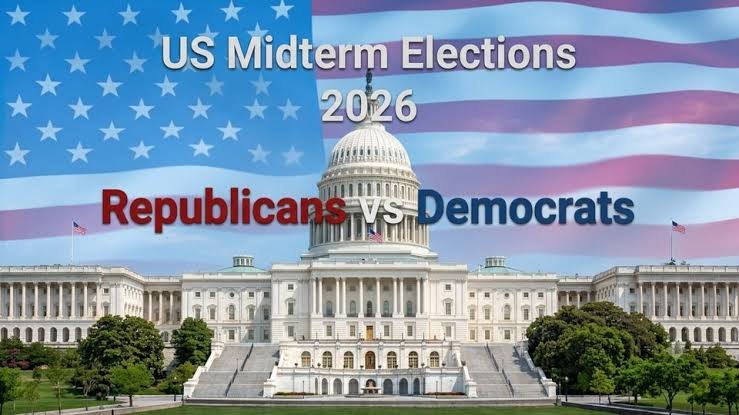
The 2026 U.S. election and the economy are closely connected as American voters prepare to make decisions that could influence jobs, wages, inflation, interest rates, taxes, business conditions, housing costs, and financial markets.
The 2026 midterm election arrives at an important economic moment. The U.S. labor market has slowed, wage growth has moderated, interest rates remain elevated, and inflation continues to influence household budgets. At the same time, businesses and investors are watching government policy, artificial intelligence investment, energy costs, trade policy, and interest-rate decisions.
The latest employment report provides an especially important snapshot. According to the U.S. Bureau of Labor Statistics, the economy added just 29,000 non-farm jobs in September 2026, while the unemployment rate was 4.2%. Average hourly earnings increased 3.0% over the previous 12 months.
These numbers matter politically because voters often judge the economy through their own financial experiences. A person may not follow GDP or Federal Reserve policy closely, but they notice whether they can find a job, whether their paycheck is growing, whether their mortgage payment is affordable, and whether groceries and healthcare are becoming more expensive.
Interest rates are another major issue. The Federal Reserve’s target range stood at 3.75% to 4.00% following its September 2026 decision.
The interaction between employment, wages, inflation, and interest rates could therefore become one of the most important economic stories surrounding the 2026 election.
Why the Economy Matters in the 2026 Election
Economic conditions are among the most important factors influencing voter sentiment.
When people believe the economy is improving, they may feel more confident about employment, income, homeownership, investing, and retirement.
When households face rising expenses or difficulty finding work, economic frustration can influence political preferences.
The 2026 election is especially significant because it takes place during a period when the economy presents a mixed picture.
On one side, unemployment remains relatively low by historical standards. On the other, hiring has slowed considerably.
The Federal Reserve Bank of St. Louis noted that September’s unemployment rate increased only modestly to 4.2%, while payroll growth slowed to 29,000. The St. Louis Fed described the labor market as remaining relatively healthy from a historical perspective while highlighting the weaker pace of hiring.
This creates a complicated political environment.
The economy does not look like a traditional severe recession, but many workers may still feel that finding a better job has become difficult.
The 2026 Election and Jobs
Jobs are one of the clearest ways voters experience economic policy.
Employment affects household income, consumer spending, mortgage payments, creditworthiness, retirement contributions, and overall financial security.
The September 2026 employment report showed a major slowdown in payroll growth.
The U.S. added 29,000 jobs in September. July employment was revised downward by 31,000 jobs, while August was revised downward by 29,000. Together, those revisions reduced previously reported employment by 60,000 jobs.
That does not automatically mean the United States is entering a recession.
However, it does suggest that employers have become more cautious.
A slower hiring environment can affect the political debate because workers may become less confident about changing jobs or negotiating higher salaries.
What a Low-Hire, Low-Fire Labor Market Means
One of the most interesting characteristics of the 2026 labor market is the combination of relatively low unemployment and relatively weak hiring.
The Federal Reserve Bank of Kansas City has described this environment as a low-hire, low-fire labor market.
That means companies are not laying off workers at extremely high rates, but they are also not aggressively hiring new employees.
This distinction is important.
A labor market can appear healthy because unemployment is low while still being challenging for job seekers.
Workers who already have jobs may feel relatively secure.
People searching for a new job may have a different experience.
That difference could become politically important in 2026.
Unemployment and Voter Confidence
The unemployment rate is one of the most closely watched economic indicators.
In September 2026, the unemployment rate was 4.2%, compared with 4.1% in August. The labor force participation rate increased to 61.8%.
A 4.2% unemployment rate is not historically extreme.
However, unemployment alone does not tell the entire story.
Voters may also consider:
- How easy it is to find work
- Whether jobs provide sufficient income
- Whether wages are increasing
- Whether companies are hiring
- Whether layoffs are increasing
- Whether young workers can enter the labor market
- Whether workers can afford housing and healthcare
For that reason, election-year economic analysis should look beyond one headline number.
Wages and the 2026 Election
Wages are arguably more important to households than almost any other labor-market statistic.
People use wages to pay for:
- Housing
- Food
- Transportation
- Healthcare
- Education
- Utilities
- Insurance
- Retirement savings
- Debt payments
According to the September employment report, average hourly earnings increased by 0.1% during the month and were up 3.0% over the previous 12 months.
The political importance of wage growth depends on inflation.
If wages increase faster than consumer prices, workers may gain purchasing power.
If prices increase faster than wages, workers can feel financially squeezed even when their nominal salary rises.
This is why voters may judge the economy based on real purchasing power, not simply annual wage increases.
Real Wages and Household Purchasing Power
Real wages measure wage growth after accounting for inflation.
Consider a simplified example.
If a worker receives a 3% raise but household expenses rise 4%, the worker’s purchasing power has declined by approximately 1%.
If the worker receives a 5% raise while prices rise 3%, purchasing power has improved.
This relationship is extremely important during elections.
Candidates may highlight wage growth, but voters are more likely to ask whether their paychecks actually cover more expenses.
Inflation and the 2026 Economy
Inflation remains an important factor connecting wages and interest rates.
When inflation is persistent, the Federal Reserve may maintain or increase interest rates to reduce price pressures.
Higher interest rates can slow borrowing and spending.
That can eventually affect business investment and hiring.
The Federal Reserve’s September 2026 policy decision brought the federal funds target range to 3.75% to 4.00%. Federal Reserve data also showed PEE inflation at 3.7% in July 2026.
This creates a difficult balancing act.
Policymakers want inflation to move toward the Federal Reserve’s 2% objective, but they also want to avoid unnecessarily weakening employment.
Interest Rates and the Federal Reserve
Interest rates may be one of the most important economic subjects surrounding the 2026 election.
The Federal Reserve does not set policy based on election results.
Instead, it evaluates economic conditions, including inflation and employment.
However, political campaigns frequently discuss interest rates because monetary policy affects consumers and businesses.
When interest rates are high:
- Mortgage borrowing becomes more expensive.
- Auto loans can become more expensive.
- Credit-card interest costs can increase.
- Business loans become more expensive.
- Commercial real estate financing becomes harder.
- Investment decisions can change.
For households carrying significant debt, interest rates can have a major impact on monthly expenses.
How Interest Rates Affect Mortgages
Housing is one of the areas where interest rates become particularly visible.
Suppose a buyer takes out a large mortgage.
A higher mortgage rate can increase the monthly payment even if the price of the house remains unchanged.
That can reduce affordability.
Higher rates may also discourage homeowners from selling because existing homeowners with low-rate mortgages may not want to replace them with higher-rate loans.
This can reduce housing inventory and affect real estate markets.
Consequently, the 2026 election’s economic debate may indirectly affect the housing market through discussions about inflation, fiscal policy, and Federal Reserve independence.
Interest Rates and Small Businesses
Small businesses also feel the impact of interest rates.
Entrepreneurs may need financing to:
- Purchase equipment
- Expand locations
- Hire workers
- Buy inventory
- Purchase commercial property
- Refinance existing debt
When borrowing costs rise, some business owners postpone expansion.
That can reduce demand for workers and investment.
On the other hand, lower interest rates can encourage borrowing and investment if inflation is sufficiently controlled.
This relationship makes monetary policy important for entrepreneurs even though the Federal Reserve does not directly control individual business loans.
Interest Rates and Consumer Spending
Consumers respond to interest rates in several ways.
High rates can discourage borrowing.
Someone considering a new car may delay the purchase because financing is expensive.
A family considering a home may decide to rent instead.
A business owner may postpone an expansion.
These decisions can collectively affect economic growth.
Consumer spending represents a large portion of U.S. economic activity, so changes in borrowing conditions can eventually influence employment and business revenue.
The Election and Business Investment
Business investment is another major economic issue.
Companies decide whether to invest based on expectations about:
- Consumer demand
- Interest rates
- Taxes
- Regulations
- Labor costs
- Technology
- Energy prices
- Trade policy
Election uncertainty can make some businesses more cautious.
Companies may wait to see whether tax or regulatory rules will change.
Other companies may continue investing because they have long-term strategic priorities that are independent of political developments.
Taxes and the Economy
Tax policy is likely to remain important during the 2026 election.
Taxes affect both individuals and businesses.
Major areas of interest include:
- Individual income taxes
- Corporate taxes
- Capital gains taxes
- Small-business taxation
- Retirement-account rules
- Tax credits
- Estate taxes
Changes in tax policy can influence household disposable income and corporate investment.
For example, a reduction in taxes can increase after-tax income, while a tax increase can reduce disposable income.
However, the economic effect depends on how the policy is designed and how it is financed.
Government Spending and Economic Growth
Government spending can influence economic activity through infrastructure, defense, healthcare, education, research, and other programs.
Government spending can support demand during weak economic periods.
However, persistent deficits can also increase government borrowing requirements.
Higher government borrowing can influence bond markets and potentially affect interest rates.
That creates another connection between elections and financial markets.
The National Debt and Interest Rates
The federal debt is an increasingly important economic issue.
As government borrowing grows, investors pay close attention to Treasury markets.
Treasury yields influence borrowing costs across the economy.
Mortgage rates, corporate bond rates, and other borrowing costs are not identical to the federal funds rate, but they are influenced by broader interest-rate and bond-market conditions.
Therefore, election debates about spending, taxation, and deficits can affect investor expectations.
Inflation, Energy Prices, and the Election
Energy prices can influence both inflation and voter sentiment.
Higher gasoline prices directly affect consumers.
Higher energy costs can also raise business expenses.
Transportation companies may pay more for fuel.
Manufacturers may pay more for energy.
Restaurants may face higher delivery costs.
Businesses may eventually pass some of these costs to consumers.
This creates a chain:
Energy prices → business costs → consumer prices → household budgets → voter sentiment
That is why energy policy can have economic consequences far beyond the gasoline station.
Artificial Intelligence and Jobs
Artificial intelligence is another major economic issue in 2026.
AI investment has accelerated in areas such as:
- Data centers
- Semiconductors
- Cloud computing
- Software
- Automation
- Security
- Financial technology
AI can increase productivity and create new industries.
But it can also create uncertainty about employment.
Some workers may worry that automation will reduce demand for certain jobs.
Other workers may benefit from new opportunities created by AI investment.
This creates a complex political question.
The challenge for policymakers is encouraging technological innovation while helping workers adapt to changing labor-market requirements.
AI Investment and the Stock Market
AI has also become an important driver of financial markets.
Investors are watching companies involved in:
- Semiconductors
- Cloud computing
- Data centers
- Power infrastructure
- Software
- Networking
- Advanced computing
Strong AI investment can support corporate revenue and capital expenditure.
However, investors should also consider valuation risk.
If expectations become too optimistic, some technology stocks can become vulnerable to sharp corrections.
The 2026 election may affect regulation and energy policy surrounding AI, but market performance will still depend heavily on company earnings and economic conditions.
The Election and Financial Markets
The stock market does not simply rise or fall based on which political party wins.
Markets respond to expectations.
Investors ask:
- What policies are likely?
- Which laws can actually pass?
- How will taxes change?
- Will regulations increase or decrease?
- What will happen to government spending?
- How will interest rates respond?
- What will corporate earnings look like?
The market may react strongly if election results differ from expectations.
If the outcome is already priced into markets, the reaction may be smaller.
Why Political Predictions Can Be Dangerous for Investors
Investors sometimes make the mistake of treating elections as binary investment signals.
For example:
“Party A will win, therefore stocks will fall.”
That type of prediction can be dangerous.
Markets are much more complicated.
A political result can have a negative effect on one industry and a positive effect on another.
An election can also change expectations about interest rates, but economic data may later overwhelm the political impact.
Long-term investors should therefore avoid making major portfolio decisions based solely on election forecasts.
Midterm Elections and Market Volatility
Midterm elections can create short-term uncertainty.
Before the election, investors may worry about:
- Congressional control
- Tax legislation
- Government spending
- Regulation
- Trade
- Debt negotiations
After the election, uncertainty may decline once the political outcome becomes clear.
But this does not mean markets will automatically rise.
Other economic factors can dominate.
The Importance of Corporate Earnings
Corporate earnings remain one of the most important long-term drivers of stock prices.
Even if political conditions are favorable, companies need revenue and profits to justify higher valuations.
Investors should therefore monitor:
- Earnings growth
- Revenue growth
- Profit margins
- Capital expenditure
- Debt levels
- Cash flow
- Consumer demand
Political developments matter, but profitable companies ultimately drive long-term equity value.
The Election and Bond Markets
Bond investors pay close attention to inflation, government borrowing, and Federal Reserve policy.
If investors expect inflation to remain high, long-term bond yields can rise.
If investors expect inflation to decline, yields may fall.
Election-related fiscal proposals can influence these expectations.
For this reason, investors should monitor Treasury yields alongside stock indexes.
Why the Fed May Be Cautious
The Federal Reserve faces a difficult situation.
The labor market has weakened, but inflation remains above the central bank’s target.
The September employment report showed only 29,000 new jobs and a 4.2% unemployment rate.
At the same time, the Federal Reserve’s policy rate remains at 3.75% to 4.00%.
Reuters reported that weaker September employment data increased expectations that the Fed could pause in October while continuing to monitor inflation data closely.
This illustrates why interest rates cannot be analyzed separately from inflation and employment.
The Fed’s Dual Mandate
The Federal Reserve has two central goals:
- Maximum employment
- Stable prices
These goals can sometimes conflict.
If inflation is too high, the Fed may need restrictive policy.
If unemployment rises sharply, policymakers may need to consider the risks of keeping rates too high for too long.
The 2026 economy presents precisely this challenge.
Employment is cooling while inflation remains elevated.
What Lower Interest Rates Could Mean
If inflation falls sufficiently, the Federal Reserve could eventually have more room to reduce interest rates.
Lower rates can support:
- Home purchases
- Business investment
- Consumer borrowing
- Refinancing
- Real estate
- Economic growth
However, lower rates are not automatically positive.
If rates fall because the economy is entering a serious downturn, businesses and investors may still face significant challenges.
Therefore, investors must consider why rates are changing, not simply whether they are moving up or down.
What Higher Interest Rates Could Mean
If inflation remains stubbornly high, the Federal Reserve could keep rates elevated or potentially increase them.
That could pressure:
- Housing
- Business investment
- Consumer borrowing
- Commercial real estate
- Highly leveraged companies
- Growth stocks
But higher rates can also benefit savers through higher yields on certain cash and fixed-income products.
The effect is therefore different for borrowers and savers.
The Election and Consumer Credit
Millions of Americans use credit cards, auto loans, personal loans, and mortgages.
When interest rates remain high, households with variable-rate debt can face higher costs.
This can reduce disposable income.
Consumers may then cut discretionary spending.
That can affect businesses.
The economic chain can therefore look like:
Higher rates → higher debt payments → lower discretionary spending → weaker business demand → slower hiring
This relationship is one reason interest rates matter so much to the economy.
Housing Affordability and the Election
Housing affordability could become a major economic election issue.
Americans are dealing with a combination of:
- Home prices
- Mortgage rates
- Property taxes
- Insurance costs
- Maintenance costs
- Limited inventory
Even if mortgage rates decline, home prices may remain high in areas where housing supply is limited.
This means policymakers cannot solve affordability through interest rates alone.
Housing construction, zoning, infrastructure, labor costs, and financing conditions can all matter.
The Construction Industry and Jobs
Construction is particularly important because it connects housing, employment, infrastructure, and interest rates.
Construction companies depend on:
- Financing
- Materials
- Labor
- Insurance
- Equipment
- Housing demand
- Government infrastructure spending
Higher interest rates can reduce demand for new construction.
Government infrastructure spending can increase demand.
Labor shortages can raise construction costs.
This makes construction an important indicator for the broader economy.
Small Business Confidence
Small businesses often respond quickly to changes in consumer demand.
A restaurant owner, contractor, retailer, or professional service provider may notice changes in the economy before national statistics become obvious.
Business owners pay attention to:
- Customer demand
- Hiring costs
- Insurance
- Taxes
- Interest rates
- Rent
- Energy costs
- Supply-chain expenses
The 2026 election could influence expectations in each of these areas.
The Role of Business Insurance
Insurance costs are another expense that businesses must consider.
Small businesses may purchase:
- General liability insurance
- Commercial property insurance
- Workers’ compensation insurance
- Professional liability insurance
- Business owners policies
- Commercial auto insurance
Higher operating expenses can reduce business profitability.
For this reason, economic policy is connected not only to taxes and interest rates but also to the overall cost of running a business.
The Election and Retirement Planning
Retirement investors should pay attention to economic policy without becoming overly reactive.
Retirement accounts such as 401(k)s and IRAs are designed for long-term investing.
Election cycles are short compared with retirement horizons.
A worker in their 30s may have several decades before retirement.
A worker close to retirement has a shorter horizon and may need a different risk strategy.
The appropriate response to political uncertainty therefore depends on individual circumstances.
Diversification During an Election Year
Diversification can reduce dependence on any single asset.
A diversified portfolio may include different combinations of:
- U.S. stocks
- International stocks
- Bonds
- Cash
- Real estate
- Other assets
The correct allocation depends on risk tolerance and financial goals.
The key principle is that investors should not place their entire financial future on a prediction about election results.
How Investors Can Prepare for the 2026 Election
Investors can take several practical steps.
Review Your Asset Allocation
Make sure your portfolio reflects your risk tolerance.
Check Your Time Horizon
Short-term investors may need more stability than long-term investors.
Review Your Emergency Fund
Adequate cash reserves can reduce the need to sell investments during market volatility.
Review Your Debt
High-interest debt can become especially expensive during periods of elevated interest rates.
Consider Tax Implications
Potential changes in tax policy may affect investment decisions.
Avoid Emotional Trading
Election headlines can create fear and excitement.
A disciplined investment plan can help prevent unnecessary transactions.
How Workers Can Prepare for Economic Uncertainty
Workers can also strengthen their finances.
Useful steps may include:
- Building emergency savings
- Reducing high-interest debt
- Improving job skills
- Updating resumes
- Developing professional networks
- Increasing retirement contributions when possible
- Reviewing health insurance
- Evaluating major expenses
These strategies can improve financial resilience regardless of election results.
The Difference Between Political Promises and Economic Policy
Voters should distinguish between campaign promises and enacted policy.
A candidate can propose a tax reduction, spending program, healthcare change, or regulatory reform.
But turning a proposal into law may require congressional approval.
The final legislation may look very different from the original campaign proposal.
Therefore, voters and investors should avoid assuming that every campaign promise will immediately affect the economy.
How Congressional Control Matters
The 2026 election will influence the composition of Congress.
Congress plays a major role in legislation involving:
- Taxes
- Government spending
- Healthcare
- Business regulation
- Infrastructure
- Trade
- Retirement programs
The balance of power can therefore affect how much of a political agenda can become law.
A divided Congress may produce more limited legislative change.
Unified control can make major policy changes easier, although internal party disagreements can still matter.
Why Election Uncertainty May Decline After November
Markets often dislike uncertainty more than they dislike a particular political outcome.
Once election results are known, investors can begin adjusting to a clearer policy environment.
The uncertainty premium may decline.
However, markets can remain volatile if the election produces disputed results, very narrow congressional margins, or major policy uncertainty.
The November outcome will therefore be only the beginning of the next phase of economic analysis.
Economic Data to Watch After the Election
Investors and policymakers will continue watching:
- Monthly employment reports
- Consumer Price Index
- PEE inflation
- Retail sales
- GDP
- Housing data
- Consumer confidence
- Industrial production
- Business investment
- Corporate earnings
These indicators will help determine whether the economy is accelerating or slowing.
Why One Jobs Report Does Not Tell the Whole Story
The September jobs report was weak, but one month of data should not be interpreted in isolation.
The BIS reported that employment in July and August was revised down by a combined 60,000 jobs.
Economic data are frequently revised.
That means investors should focus on trends rather than one monthly number.
A sustained slowdown in hiring would be more significant than one disappointing report.
Similarly, a rebound in hiring could change the economic outlook quickly.
What a Stronger Labor Market Would Mean
If hiring accelerates, unemployment stabilizes or declines, and wage growth remains healthy, consumer confidence could improve.
Stronger employment can support:
- Consumer spending
- Housing demand
- Business revenue
- Retirement contributions
- Credit quality
- Economic growth
Politically, a stronger labor market could improve perceptions of economic management.
What a Weaker Labor Market Would Mean
A sustained deterioration in employment could create more serious economic concerns.
If unemployment rises significantly, households may reduce spending.
Businesses could reduce hiring further.
Corporate earnings could weaken.
Financial markets could become more volatile.
The Federal Reserve would then face a more difficult policy decision.
This is why employment data are likely to remain central to the economic debate surrounding the 2026 election.
The Connection Between Jobs and Interest Rates
Jobs and interest rates are closely connected through Federal Reserve policy.
A simplified relationship is:
Strong labor market + persistent inflation → higher-for-longer rates may be necessary
while:
Weak labor market + declining inflation → greater room for lower rates
Real-world monetary policy is more complicated, but this framework helps explain why investors watch employment reports so closely.
Why Wage Growth Matters for Inflation
Wage growth can affect inflation because labor is a major cost for businesses.
If wages increase rapidly while productivity remains weak, companies may raise prices to protect margins.
However, higher wages do not automatically cause inflation.
If productivity improves, companies may be able to pay workers more without significantly increasing prices.
Therefore, policymakers examine wages alongside productivity, consumer demand, and other inflation indicators.
Productivity and the Future of the U.S. Economy
Productivity is especially important in the AI era.
If artificial intelligence improves productivity, companies may be able to produce more with the same workforce.
That could support economic growth without requiring equally rapid increases in labor costs.
However, productivity gains can take time to spread across the economy.
The political debate may therefore increasingly focus on how technological change affects workers and wages.
Global Events and the U.S. Economy
The U.S. economy is also affected by global developments.
International conflicts, commodity prices, trade relationships, and foreign demand can affect inflation and economic growth.
These external forces can complicate the impact of domestic election policies.
For example, higher energy prices caused by geopolitical events can increase inflation even if domestic demand is slowing.
That can make the Federal Reserve’s job more difficult.
What Investors Should Expect Around Election Day
Investors should expect some uncertainty around Election Day.
Possible sources of volatility include:
- Unexpected election results
- Congressional control
- Tax-policy expectations
- Regulation
- Fiscal policy
- Trade policy
- Interest-rate expectations
But volatility does not necessarily mean investors should sell.
The appropriate response depends on the investor’s goals and risk tolerance.
Long-Term Investing vs. Election Trading
There is a major difference between investing and trading.
Long-term investing focuses on:
- Business fundamentals
- Earnings
- Valuation
- Diversification
- Time horizon
Election trading focuses on short-term market reactions.
The second strategy is much more difficult because markets incorporate expectations very quickly.
For most long-term investors, maintaining a disciplined plan may be more effective than trying to predict every political move.
What the 2026 Election Means for American Workers
For workers, the most important economic questions are practical.
Can I find a job?
Is my salary growing?
Can I afford housing?
Can I pay for healthcare?
Can I save for retirement?
Can I manage debt?
These questions explain why jobs and wages are likely to be central to the 2026 election.
What the 2026 Election Means for Businesses
For businesses, the key questions include:
Will customers continue spending?
Will borrowing costs decline?
Will taxes change?
Will regulations change?
Will labor costs increase?
Will energy costs rise?
Will trade policy affect supply chains?
Businesses will be watching election results because these factors can influence investment decisions.
What the 2026 Election Means for Investors
For investors, the most important lesson is that politics is only one part of the investment environment.
Investors should continue monitoring:
- Interest rates
- Inflation
- Earnings
- Employment
- Economic growth
- Government debt
- AI investment
- Energy markets
- Global conditions
The election can change expectations, but economic fundamentals ultimately remain important.
The Biggest Economic Risks Heading Into the Election
Several risks deserve attention.
Persistent Inflation
If inflation remains elevated, the Federal Reserve may keep rates high.
Labor-Market Weakness
A significant deterioration in employment could reduce consumer spending.
High Borrowing Costs
High rates could pressure households and businesses.
Energy Shocks
Higher energy prices could increase inflation.
Policy Uncertainty
Unclear tax and regulatory policy could delay business investment.
Market Valuations
Expensive assets may become vulnerable if economic growth disappoints.
Potential Opportunities in the 2026 Economy
Economic uncertainty also creates opportunities.
Businesses that improve productivity may benefit from AI.
Companies with strong balance sheets may perform better during high-rate environments.
Infrastructure investment can create opportunities for construction and industrial businesses.
Financial companies can benefit from certain rate environments.
Investors may also find opportunities when market volatility creates attractive valuations.
The key is to evaluate opportunities based on fundamentals rather than political excitement.
A Practical Economic Checklist for Voters
Before Election Day, voters can evaluate candidates based on several economic questions:
- What is the candidate’s plan for inflation?
- How would the candidate address housing affordability?
- What policies could affect jobs?
- What is the tax proposal?
- How would government spending change?
- How would healthcare costs be addressed?
- What is the approach to energy prices?
- How would small businesses be affected?
- What is the approach to trade?
- How would the policy be funded?
This approach helps voters move beyond slogans.
A Practical Investment Checklist for 2026
Investors can ask:
- Is my portfolio diversified?
- Does my asset allocation match my risk tolerance?
- Do I have enough emergency savings?
- Do I understand my debt costs?
- Am I investing according to a long-term plan?
- Am I overreacting to political news?
- Have I considered tax implications?
- Are my retirement contributions on track?
- Do I understand the risks of my investments?
- Am I making decisions based on fundamentals?
What to Watch Between the Election and Year-End
The period after Election Day will be important.
Investors will analyze the election outcome while also watching Federal Reserve decisions and economic data.
Employment reports, inflation readings, and corporate earnings will continue to influence expectations.
If inflation remains high, interest rates could stay restrictive.
If employment weakens further and inflation cools, monetary policy could become more supportive.
The combination of these variables will likely be more important than election headlines alone.
Final Outlook for Jobs, Wages, and Interest Rates
The U.S. economy enters the 2026 election with a complicated combination of relatively low unemployment, slower hiring, moderate wage growth, elevated interest rates, and continuing inflation concerns.
The September jobs report is a clear example of this mixed environment.
The economy added only 29,000 jobs, unemployment reached 4.2%, and average hourly earnings increased 3.0% over the previous year.
At the same time, the Federal Reserve’s policy rate remains between 3.75% and 4.00%.
These conditions create a difficult environment for policymakers and voters.
Workers want strong job opportunities and rising purchasing power.
Consumers want lower prices and affordable borrowing costs.
Businesses want predictable regulation, manageable financing costs, and strong customer demand.
Investors want economic growth, stable inflation, and profitable companies.
The challenge is that these goals can sometimes conflict.
Conclusion
The 2026 Election and the U.S. Economy: Jobs, Wages, and Interest Rates are deeply connected.
Jobs determine household income. Wages determine purchasing power. Inflation determines how far those wages go. Interest rates influence mortgages, consumer credit, business loans, investment, and economic growth.
The 2026 election could influence the policy environment surrounding taxes, spending, regulation, trade, healthcare, energy, and business conditions.
However, voters and investors should remember that political outcomes do not operate independently from economic fundamentals.
The Federal Reserve will continue responding to inflation and employment conditions. Businesses will continue making investment decisions based on demand and profitability. Consumers will continue responding to prices and wages. Investors will continue evaluating corporate earnings and valuations.
The latest labor-market data show why the economic debate is so important. September brought only 29,000 new jobs, while unemployment stood at 4.2% and annual wage growth was 3.0%.
The Federal Reserve is also navigating a difficult balance between inflation and employment, with the federal funds target range at 3.75% to 4.00%.
For voters, the most important issue may ultimately be whether their financial lives are improving.
For investors, the key is to avoid treating election headlines as automatic buy-or-sell signals.
The strongest long-term strategy is to understand how jobs, wages, inflation, interest rates, taxes, business conditions, and financial markets interact.
As the 2026 election approaches, those relationships will remain at the center of the American economic debate.
For more information about this vertical Click Here
For more information about this vertical Click Here