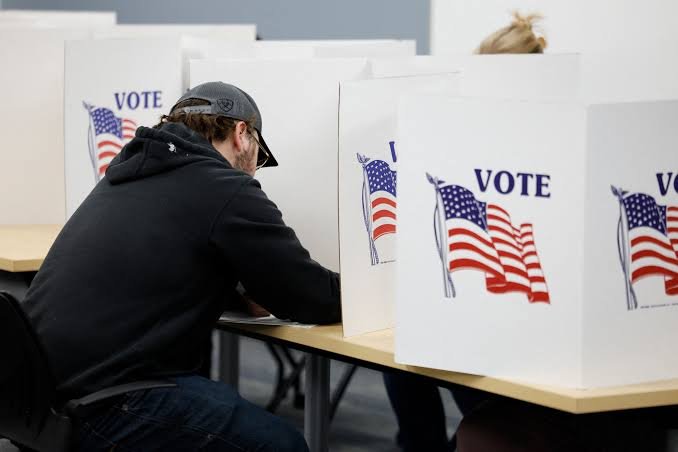
The U.S. Election 2026 is shaping up to be one of the most important political and economic events of the year. While the 2026 election is a midterm election rather than a presidential election, its outcome could influence control of Congress, federal policy, taxation, regulation, government spending, healthcare, energy, housing, and financial markets.
For American voters, the economy is not an abstract political topic. It affects grocery bills, housing costs, healthcare expenses, gasoline prices, wages, employment opportunities, borrowing costs, retirement savings, and investment portfolios. For businesses and investors, the election can influence expectations about future legislation and regulation.
The economic environment heading into the 2026 midterms is particularly important because Americans continue to express significant concerns about affordability. Pew Research Center reported that 69% of U.S. adults surveyed in July 2026 were very concerned about healthcare costs, 66% about food and consumer prices, 64% about housing costs, and 56% about gasoline prices.
This means the economy could play a major role in how voters evaluate candidates and political parties.
At the same time, investors should be careful about assuming that an election result automatically determines stock market performance. Historical market data suggests that broader economic conditions, Federal Reserve policy, corporate earnings, inflation, interest rates, and business investment can be more important than political headlines alone.
What Is the 2026 U.S. Election?
The 2026 U.S. election is a midterm election held halfway through President Donald Trump’s four-year term. Unlike a presidential election, voters will not choose a president in 2026.
Instead, voters will decide which party controls Congress and will vote in numerous state and local races.
All 435 seats in the U.S. House of Representatives are up for election, along with 35 of the 100 Senate seats. Governors and thousands of state and local officials will also be elected around the country.
The balance of power in Congress matters because major federal legislation generally requires action by both the House and Senate before reaching the president.
Consequently, the election could determine how much of the administration’s economic agenda can move forward during the final two years of the presidential term.
A divided government could produce a different economic environment from a government in which one party controls both chambers of Congress and the White House.
Why the Economy Could Be the Biggest Election Issue
Economic conditions frequently influence midterm elections because voters tend to judge the party in power based partly on their personal financial experiences.
The 2026 election is especially sensitive to economic issues because many Americans continue to feel pressure from the cost of living.
Inflation is one part of the story, but voters also care about the actual level of prices.
Even when inflation slows, prices do not automatically return to their previous levels. If groceries, housing, healthcare, insurance, electricity, and other necessities remain expensive, households may continue to feel financially stressed.
Pew Research Center found that Americans remained highly concerned about healthcare, food, housing, gasoline, and electricity costs in 2026.
This creates an important political distinction:
Lower inflation does not necessarily mean lower prices.
For voters, the more important question may be whether their income is keeping pace with everyday expenses.
Inflation and the 2026 Election
Inflation could be one of the most important economic factors influencing voter behavior.
When prices rise quickly, households generally have less purchasing power. Families may need to spend more on food, rent, transportation, insurance, and healthcare.
Inflation can also affect businesses.
Companies facing higher labor, energy, transportation, and raw-material costs may raise prices, reduce hiring, postpone expansion, or accept lower profit margins.
The Federal Reserve closely monitors inflation because persistent price increases can influence monetary policy.
Recent economic data show why inflation remains relevant heading into the election. Reuters reported in late September 2026 that the Personal Consumption Expenditures price index increased 0.3% in August, while core PACE inflation remained at 3.0% year over year.
For voters, the important question is not simply whether inflation is rising or falling. It is whether household purchasing power is improving.
Candidates who can persuade voters that their policies will reduce financial pressure may gain an advantage.
Cost of Living and Voter Behavior
The cost of living may be even more politically important than the official inflation rate.
A household can experience financial stress even when inflation is relatively moderate.
For example, a family may be dealing with:
- Higher mortgage or rent payments
- More expensive health insurance
- Higher grocery bills
- Increased electricity costs
- Higher auto insurance premiums
- Expensive childcare
- Rising education expenses
- Higher credit-card interest costs
- More expensive vehicle loans
These expenses can directly influence how voters view the economy.
Recent polling and financial-market analysis show affordability remains a major theme heading into the 2026 midterms. Morgan Stanley has described affordability as a defining economic issue for the election.
That makes cost-of-living policies potentially important to voters across income levels.
Jobs and the Labor Market
Employment is another major economic factor.
A strong labor market can provide workers with more opportunities, higher wages, and greater confidence about the future.
A weaker labor market can produce the opposite effect.
The latest employment data before the 2026 election showed signs of cooling. The Washington Post reported that employers added only 29,000 jobs in September and that the unemployment rate increased to 4.2%.
A weakening labor market can create political challenges for the party controlling the White House.
Voters may ask:
- Are jobs being created?
- Are wages rising?
- Can workers find full-time employment?
- Are layoffs increasing?
- Are businesses hiring?
- Are younger workers finding opportunities?
These questions can influence perceptions of the economy even when headline economic indicators remain relatively strong.
Wages and Purchasing Power
Wage growth matters because Americans ultimately experience the economy through their household budgets.
If wages increase faster than prices, workers generally gain purchasing power.
If prices increase faster than wages, households can feel poorer even if nominal salaries rise.
This is why the relationship between wages and inflation is particularly important during election campaigns.
Candidates may highlight wage growth, employment, tax policies, or business investment, but voters are often more interested in whether their paychecks cover their expenses.
Interest Rates and the Federal Reserve
Interest rates are another major economic issue that can affect voters and markets.
The Federal Reserve sets monetary policy independently of Congress, but election-year economic conditions can still influence the political debate surrounding interest rates.
Higher interest rates generally make borrowing more expensive.
That can affect:
- Mortgages
- Credit cards
- Auto loans
- Business loans
- Commercial real estate
- Investment decisions
- Consumer spending
In September 2026, the Federal Reserve increased its policy rate to a range of 3.75% to 4.00%, according to U.S. Bank’s market commentary.
Higher borrowing costs can create political pressure because households and businesses may find it harder to finance major purchases.
Mortgage Rates and Housing
Housing is one of the most politically sensitive parts of the economy.
High mortgage rates can make home ownership more difficult even when home prices stabilize.
For prospective buyers, the monthly payment depends on both the price of the property and the interest rate on the mortgage.
For existing homeowners, higher rates can discourage refinancing and reduce mobility.
Renters can also be affected because high borrowing costs may increase financing costs for property owners.
Housing affordability therefore has implications for:
- First-time home-buyers
- Renters
- Landlords
- Real estate investors
- Home-builders
- Mortgage lenders
- Construction companies
Because housing represents one of the largest household expenses, election-related economic policies could receive significant attention from voters.
Healthcare Costs and Insurance
Healthcare is another major economic concern.
Pew Research Center found that healthcare costs were among the issues Americans were most concerned about in 2026, with 69% saying they were very concerned about healthcare costs.
Healthcare policy can influence household budgets through:
- Health insurance premiums
- Deductibles
- Prescription drug costs
- Medicare
- Medicaid
- Employer-sponsored coverage
- Hospital expenses
Political debates about healthcare therefore have both policy and financial consequences.
For many families, healthcare costs can represent thousands of dollars annually.
That makes healthcare an important economic issue rather than simply a political or social issue.
Taxes and the 2026 Election
Taxes could become one of the most important financial topics of the 2026 election.
Federal tax policy affects households, businesses, investors, and high-income individuals differently.
Potential areas of debate include:
- Individual income taxes
- Corporate taxes
- Capital gains taxes
- Tax credits
- Retirement accounts
- Small-business deductions
- Estate taxes
- Energy-related tax incentives
The election could influence the political environment surrounding future tax legislation.
However, voters should distinguish between campaign promises and laws that have actually been enacted.
A proposal discussed during an election campaign is not automatically a tax change.
For investors and business owners, this distinction is particularly important.
Small Businesses and the Election
Small businesses are another important part of the economic discussion.
Entrepreneurs care about:
- Business taxes
- Labor costs
- Health insurance
- Business loans
- Interest rates
- Regulations
- Commercial property
- Insurance premiums
- Consumer demand
Changes in federal policy can influence the cost of operating a business.
For example, higher borrowing costs can make expansion more difficult, while regulatory changes can affect compliance expenses.
The election could therefore matter significantly to contractors, retailers, professional-service businesses, manufacturers, technology companies, and other small enterprises.
Energy Prices and Gasoline Costs
Energy prices can have an unusually large political impact because consumers see gasoline prices frequently.
When gasoline becomes more expensive, households may have less money available for other purchases.
Higher energy prices can also increase business costs because transportation, manufacturing, logistics, and many services depend on energy.
Pew Research Center reported that concern about gasoline prices rose sharply during 2026, reaching 56% of adults in its July survey compared with 34% in January.
This makes energy policy another important election issue.
The Stock Market and the 2026 Election
Investors naturally want to know how the election could affect stocks.
The short answer is that political outcomes can influence markets, but they are only one factor.
Stock prices also respond to:
- Corporate earnings
- Interest rates
- Inflation
- Economic growth
- Consumer spending
- Artificial intelligence investment
- Global trade
- Energy prices
- Geopolitical developments
Morgan Stanley has noted that the election itself may be less important to markets than broader economic and business conditions.
This is an important lesson for investors.
A political headline may cause short-term volatility, but long-term stock performance generally depends on the ability of companies to generate profits and grow.
Historical Midterm Market Patterns
Historical data can provide useful context.
Charles Schwa b reported that, since 1974, the SUP 500 had averaged a 5.7% return during the three months immediately following midterm elections, with positive returns in 11 of 13 historical cases examined. Over six months, the average was 12.4%, with all 13 periods positive.
However, historical performance is not a guarantee.
Every election occurs under different economic circumstances.
For example, inflation, interest rates, recessions, geopolitical conflicts, technological developments, and corporate earnings can all change the market environment.
Investors should therefore avoid assuming that history will automatically repeat itself in 2026.
Why Election Uncertainty Can Create Market Volatility
Financial markets dislike uncertainty.
Before an election, investors may not know:
- Which party will control Congress
- What legislation could pass
- Which industries may face new regulations
- Whether taxes could change
- How government spending might evolve
- How trade policy might develop
This uncertainty can cause some investors to reduce risk temporarily.
Markets can therefore move sharply around major political events.
However, volatility does not necessarily mean a long-term decline.
Once election results become clear, investors may begin focusing again on economic fundamentals.
Divided Government and Markets
One possible outcome of the 2026 election is divided government.
For example, one party could control the House while another controls the Senate or White House.
Divided government can make major legislation more difficult to pass.
That can create both advantages and disadvantages.
The potential advantage is greater policy stability because sweeping changes may be harder to implement.
The potential disadvantage is increased political conflict around budgets, government funding, debt-limit negotiations, and oversight.
Schwa b notes that a divided Congress could limit major legislation while increasing risks around oversight, spending deadlines, and fiscal negotiations.
Technology and Artificial Intelligence
Artificial intelligence has become an increasingly important economic issue.
AI investment is affecting:
- Technology companies
- Data centers
- Electricity demand
- Semiconductor manufacturing
- Cloud computing
- Labor markets
- Productivity
- Business investment
Pew Research Center found that 49% of Americans surveyed in July 2026 were very concerned about the role of AI in the economy.
The political debate could therefore increasingly focus on AI regulation, energy requirements, employment effects, data privacy, competition, and national competitiveness.
For investors, AI could remain a major market driver regardless of election results.
Trade Policy and Tariffs
Trade policy can influence inflation, manufacturing, corporate costs, and consumer prices.
Tariffs can increase the cost of imported products and components, although the ultimate effect depends on exchange rates, supply chains, business decisions, and whether companies absorb or pass through those costs.
Businesses may respond by:
- Changing suppliers
- Moving production
- Raising prices
- Reducing margins
- Increasing domestic manufacturing
Because trade policy can affect both businesses and consumers, it is likely to remain an important economic consideration around the election.
How the Election Could Affect Investors
Investors should focus on scenarios rather than political predictions.
Different election outcomes could produce different policy expectations.
A Democratic-controlled Congress could increase expectations for certain regulatory and spending priorities.
A Republican-controlled Congress could produce different expectations around taxes, energy policy, regulation, and business conditions.
A divided Congress could limit major legislative changes.
But the actual market reaction would depend on what investors had already priced into stocks.
If an expected outcome happens, markets may react very little.
If an unexpected outcome occurs, volatility could be greater.
Should Investors Change Their Portfolios Before the Election?
Investors should be cautious about making major portfolio decisions based solely on election predictions.
Trying to trade around political events can be extremely difficult.
A diversified investment portfolio can help reduce dependence on a single company, industry, or political outcome.
Investors may want to consider:
- Asset allocation
- Diversification
- Risk tolerance
- Investment time horizon
- Emergency savings
- Retirement goals
- Tax considerations
Rather than attempting to predict every political development, long-term investors often benefit from maintaining a disciplined strategy.
How the Election Could Affect Retirement Planning
Retirement investors should also pay attention to the election without allowing political uncertainty to dominate their decisions.
Potential policy debates could involve:
- Social Security
- Medicare
- Retirement savings
- Workplace retirement plans
- Tax incentives
- Individual retirement accounts
- Capital gains taxation
These policies can affect long-term household financial planning.
However, retirement planning should generally be based on long-term financial goals rather than a single election cycle.
Social Security and Medicare
Social Security and Medicare are major issues because millions of Americans depend on these programs.
Changes to benefits, eligibility, taxes, or program financing could have significant financial consequences.
For older Americans, healthcare and retirement security may be more important than many other election issues.
Younger voters may also pay attention because the long-term sustainability of these programs can affect future retirement planning.
How Inflation Affects Different Income Groups
Inflation does not affect every household equally.
Lower-income households often spend a larger percentage of their income on necessities.
That can make higher food, housing, transportation, and healthcare costs particularly painful.
Middle-income families may face pressure from mortgage payments, childcare, education, insurance, and everyday expenses.
Higher-income households may have more financial flexibility, although they can still be affected by taxes, investment volatility, and asset prices.
Because economic experiences vary, candidates may propose very different solutions to the same affordability problem.
What Businesses Should Watch After the Election
Businesses should pay attention to several areas after election results become clear.
Tax Policy
Changes to business taxation can affect investment and profitability.
Regulation
Changes in federal agencies and congressional priorities can affect compliance requirements.
Trade
Tariff and trade policies can influence supply chains and costs.
Labor Policy
Employment regulations and labor costs can affect business expenses.
Energy
Energy policy can influence manufacturing, transportation, utilities, and technology infrastructure.
Government Spending
Federal spending can affect demand in industries ranging from defense to infrastructure and technology.
What Consumers Should Watch
Consumers should also focus on practical economic indicators.
Important areas include:
- Inflation
- Wage growth
- Unemployment
- Mortgage rates
- Credit-card rates
- Gasoline prices
- Healthcare costs
- Housing prices
- Tax policy
These indicators provide more useful information about household finances than political headlines alone.
Election Results and Consumer Confidence
Consumer confidence can influence economic growth.
When households feel financially secure, they may be more willing to spend.
When households fear layoffs or higher costs, they may save more and reduce discretionary spending.
Election uncertainty can temporarily affect confidence, particularly if political debates become highly negative.
But confidence can change rapidly based on economic data.
A strong employment report or declining inflation can improve sentiment, while layoffs or rising prices can have the opposite effect.
The Difference Between Economic Growth and Household Experience
One of the most important concepts in election-year economics is the difference between national economic statistics and individual household experiences.
The economy can grow while some households struggle.
GDP can increase even when certain communities experience weak employment growth.
The stock market can rise even when many families cannot afford a home.
This gap can influence political behavior.
Voters usually evaluate the economy through their own financial circumstances.
That is why affordability can be more politically powerful than abstract measures of economic growth.
Why the Election May Matter More for Policy Than Markets
The election could have substantial policy implications without causing a dramatic long-term change in stock prices.
Markets ultimately respond to expected profits and economic conditions.
If election results produce only limited changes in taxes, regulation, spending, or trade policy, market effects may also be limited.
Morgan Stanley Research has argued that trade policy, geopolitics, and regulatory reforms may have a greater impact on markets than the midterm result itself.
This distinction is important for investors.
Political importance does not always equal market importance.
Key Economic Scenarios for the 2026 Election
Several broad scenarios could emerge.
Scenario 1: Unified Government
If one party controls the White House and both chambers of Congress, lawmakers could potentially have more room to pass legislation.
This could increase expectations for major policy changes.
Scenario 2: Divided Congress
If different parties control the House and Senate, major legislation could become more difficult.
Markets may interpret this as reducing the probability of sweeping policy changes.
Scenario 3: Unexpected Election Outcome
If results differ significantly from expectations, markets could experience increased volatility as investors adjust their forecasts.
Scenario 4: Narrow Majorities
A very small congressional majority could make policy-making unpredictable because a handful of lawmakers could have substantial influence over legislation.
What the 2026 Election Means for Real Estate
Real estate investors should monitor:
- Mortgage rates
- Property taxes
- Housing supply
- Construction costs
- Interest rates
- Insurance costs
- Commercial real estate demand
Election results may influence some of these factors indirectly through fiscal and regulatory policy.
However, mortgage rates are primarily influenced by broader interest-rate and bond-market conditions rather than election results alone.
What the Election Means for Small Investors
Small investors should avoid turning politics into an investment strategy.
Instead, investors can use the election as one factor in a broader financial review.
A practical checklist includes:
- Review portfolio diversification.
- Check investment time horizon.
- Evaluate risk tolerance.
- Maintain adequate emergency savings.
- Review retirement contributions.
- Consider tax implications.
- Avoid excessive concentration in politically sensitive sectors.
- Focus on long-term financial goals.
This approach can help investors remain disciplined during periods of political uncertainty.
Why Investors Should Avoid Political Overreaction
Election headlines can be emotional.
Markets may rise after one poll and fall after another.
But short-term political developments do not necessarily change the long-term value of a diversified portfolio.
Investors should distinguish between:
News that changes economic fundamentals
and
News that simply changes political expectations.
That distinction can prevent unnecessary buying and selling.
Economic Issues That Could Define the 2026 Election
The major economic issues likely to remain important include:
- Inflation
- Cost of living
- Healthcare costs
- Housing affordability
- Mortgage rates
- Jobs
- Wages
- Taxes
- Energy prices
- Government spending
- Interest rates
- Small-business conditions
- AI and employment
- Trade policy
- Retirement security
These issues affect Americans directly, making them especially important to voters.
How Voters Can Evaluate Economic Claims
Election campaigns often contain competing economic claims.
Voters should ask:
What is the proposed policy?
How much would it cost?
Who would benefit?
Who would pay for it?
Would Congress need to approve it?
How quickly could it take effect?
What evidence supports the claim?
These questions can help voters separate economic policy from campaign messaging.
How Markets Could React After Election Day
Once election results are known, markets will likely focus on what happens next.
Investors may analyze:
- Congressional leadership
- Committee assignments
- Legislative priorities
- Tax proposals
- Regulatory changes
- Government spending
- Trade policy
- Federal appointments
The initial market reaction may be driven by expectations.
Later, actual economic effects may become more important.
The Federal Reserve Will Still Matter
Regardless of who controls Congress, the Federal Reserve will remain a major factor for financial markets.
Interest-rate decisions can influence:
- Bonds
- Stocks
- Mortgages
- Consumer loans
- Business financing
- Real estate
- Currency markets
Therefore, investors should not treat the election as a replacement for monitoring monetary policy.
Economic data will continue to matter.
The Global Economy Also Matters
The U.S. economy does not operate independently.
Global events can influence American markets through:
- Oil prices
- Trade
- Currency movements
- Geopolitical conflicts
- Foreign investment
- Supply chains
- International demand
This means election results may be only one of several major forces influencing financial markets.
Long-Term Investors and Election Cycles
Long-term investors have experienced many election cycles.
Political parties change.
Presidents change.
Congress changes.
Tax rules change.
Regulations change.
Yet diversified financial markets continue to evolve.
For this reason, investors should consider whether a political development genuinely changes their long-term investment thesis before making major portfolio changes.
What the 2026 Election Could Mean for the Economy
The election could influence the U.S. economy through several channels.
First, congressional control can affect legislation.
Second, political priorities can influence business expectations.
Third, fiscal policy can affect government spending and taxation.
Fourth, regulatory policy can influence business costs.
Fifth, political uncertainty can influence market sentiment.
But none of these effects occurs in isolation.
The economy will continue to be shaped by consumer demand, productivity, technology, interest rates, inflation, employment, global trade, and corporate investment.
Bottom Line for Voters
For voters, the most important economic question may be simple:
Is my financial situation improving?
People care about whether they can afford housing, healthcare, food, transportation, energy, education, and retirement.
That explains why affordability has become such a central issue in the 2026 election.
Pew Research Center’s July survey showed Americans remained highly concerned about major household expenses, while more recent polling has continued to show cost of living as a major political issue.
Bottom Line for Investors
For investors, the election matters, but it should be viewed in context.
The results could affect taxes, regulation, government spending, trade policy, and congressional oversight.
However, investors should also monitor:
- Federal Reserve policy
- Inflation
- Economic growth
- Employment
- Corporate earnings
- AI investment
- Energy prices
- Global economic conditions
Morgan Stanley and other investment research sources emphasize that broader economic and business fundamentals can be more important to market performance than the election outcome itself.
Conclusion
The U.S. Election 2026 could have meaningful consequences for voters, businesses, investors, and the broader economy.
The election will determine the balance of power in Congress, which could influence future legislation involving taxes, spending, healthcare, energy, business regulation, and other economic priorities.
For voters, affordability is likely to remain one of the most important issues. Healthcare, housing, food, gasoline, electricity, wages, and employment all affect how Americans experience the economy.
For investors, the election could create short-term uncertainty and market volatility. However, historical evidence and current investment research suggest that investors should not assume political outcomes will automatically determine long-term market performance.
The Federal Reserve, inflation, interest rates, corporate earnings, employment, technological investment, and global economic conditions will continue to matter.
Ultimately, the most important lesson is that politics and economics are connected, but they are not the same thing.
The 2026 election can change the policy environment, but the economy will continue to depend on millions of businesses, workers, consumers, investors, financial institutions, and global markets.
For voters, the best approach is to evaluate economic policies based on evidence, affordability, sustainability, and likely consequences.
For investors, the best approach is to remain diversified, focus on long-term goals, and avoid making major financial decisions based solely on election headlines.
As Election Day approaches, Americans will be watching Washington closely. But the economy itself may ultimately have the greatest influence on how voters feel about their financial future—and how markets respond to the next chapter of U.S. economic policy.
For more information about this articular Click Here
For more information about this Click Here